

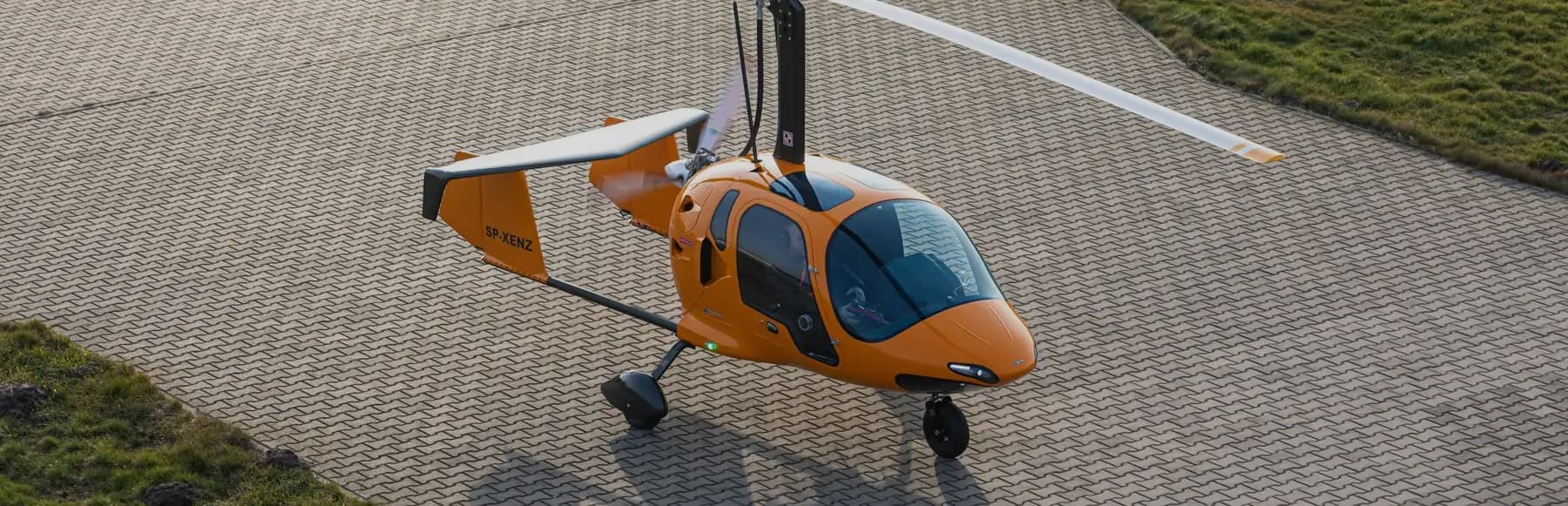
Gyrocopter vs Helicopter
Which rotorcraft is right for you?
One question decides it: do you need to hover? If you do, buy the helicopter - nothing else will do that job. If you do not, the gyroplane wins on nearly every other measure. A helicopter's engine drives its rotor, which is what lets it hold still and what makes it complex and expensive. A gyroplane's rotor is turned by the air passing through it, so it cannot hover - but it also cannot stall or spin, an engine failure costs it thrust rather than lift, and the licence costs about £30,000 less.
Argo Aero UK sells both - the ARGON gyroplanes and the ARGO AH helicopters, as United Kingdom dealer for Manufaktura Lotnicza - so the figures below are our own published ones rather than an estimate of somebody else's, and we have no reason to talk you out of either aircraft. If the gyroplane half is new to you, what a gyrocopter is explains it in a paragraph. Weighing a microlight instead? That is a different question and we answer it separately.
The short answer
One question decides it: do you need to hover? If yes, buy the helicopter - nothing else will do the job, and the rest of this page is detail. If no, the gyroplane wins on almost every measure that follows.
We are in the unusual position of selling both, so these are our own published figures rather than an estimate of somebody else's:
| ARGON GTL gyroplane | ARGO AH-22 helicopter | |
|---|---|---|
| Price from | £165,000 | £220,000 |
| Per flying hour, all in | £89.11 at 150 h a year | £97.23 at 150 h a year |
| Of which fuel, oil and servicing | About £35 | About £38 |
| Fuel | Ordinary unleaded, 23 l/h | Ordinary unleaded, 25 l/h |
| Can it hover? | No | Yes - that is what you are paying for |
| Can it stall? | No | No, but rotor speed must be managed |
| Engine failure | Already in autorotation; nothing to enter | Enter autorotation immediately |
| Endurance | A little over 5 hours | 2.6 hours including reserve |
| UK licence | PPL(G): 40 hours, from about £8,500 | PPL(H): 45 hours minimum, £40,000 to £50,000 at UK schools |
£55,000 more to buy, about £30,000 more to get licensed for, and about half the time in the air on a tank - for the one capability the gyroplane does not have. The hourly cost is the surprise: all in, the two are only about 9% apart. Whether the hover is worth the rest depends entirely on what you intend to do.
The rotor: powered vs free-spinning
In a helicopter, the engine drives the main rotor directly. That is what lets it hover - and it is also why helicopters need a tail rotor, a gearbox and a far more complex (and expensive) transmission.
A gyrocopter's rotor is not powered at all. It spins freely in autorotation: as the aircraft moves forward, air flows up through the rotor and keeps it turning, generating lift. Forward thrust comes from a separate engine-driven propeller at the back. No gearbox driving the rotor, no tail rotor, dramatically fewer moving parts.
Safety: the stall that cannot happen
When a helicopter's engine fails, the pilot must immediately enter autorotation to descend safely - it is an emergency manoeuvre that must be executed correctly, under pressure. For a gyrocopter, autorotation is not an emergency procedure. It is the normal state of flight. If the engine stops, the rotor keeps spinning and the aircraft descends gradually under full control.
A gyroplane also cannot stall the way a fixed-wing aircraft can: the rotor keeps producing lift even at very low airspeed. That is why gyros are widely regarded as one of the most forgiving categories of aircraft to fly - we cover this in depth in are gyrocopters safe.
What a helicopter does better
Honesty matters: a gyrocopter cannot hover. It needs forward motion to keep the rotor turning. If your mission genuinely requires hovering - winch operations, filming a fixed point, landing on a rooftop - you need a helicopter and the budget that comes with it.
For everything else - touring, commuting between airfields, aerial photography on the move, agricultural monitoring, or the pure joy of open-sky flying - the gyroplane matches the helicopter in many ways that count, at a fraction of the cost.
The same trade decides it for work as well as for pleasure. Where the job is covering a great deal of ground and looking at it - police patrol, a long border, a search - hours in the air matter more than the hover, and that is the side the gyroplane wins on.
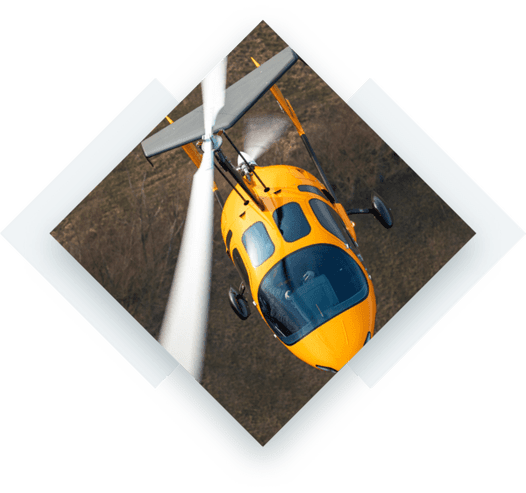
Cost: buying and owning
Mechanical simplicity is the gyrocopter's superpower. Fewer components mean a lower purchase price, cheaper insurance, and far less to inspect and replace at every service. A new, factory-built, fully equipped ARGON 915 iS starts from £125,000 and the touring ARGON GTL from £165,000. Our own ARGO AH-22 helicopter starts at £220,000, and the gap widens once you fly: the manufacturer's own sheets give £89.11 an hour for the gyroplane against £97.23 for the helicopter at 150 hours a year, both all in. Fuel, oil and scheduled servicing are about £35 of the gyroplane's figure and £38 of the helicopter's - most of the rest is wearing parts, and there the gyroplane is actually the dearer of the two. The largest single line in the helicopter's bill is one the gyroplane does not have at all - main torsion plates at £3,700 every 500 hours. Annual maintenance is required by the CAA, but the inspection list for a gyro is refreshingly short.
So which is right for you?
If you need to hover, buy a helicopter. If you want safe, affordable, exhilarating flying - with short takeoffs, tiny hangar footprint and running costs closer to a sports car than an aircraft - the gyroplane is your machine. Wondering about the numbers? See how much a gyrocopter costs, see the gyrocopters for sale in the UK, read about getting your UK gyroplane licence, what a helicopter licence costs against a gyroplane one, or talk to us. We sell both, so we have no reason to talk you into the wrong one.
Two pieces go deeper than this comparison does: what happens if a helicopter's tail rotor fails - and why the propeller on the back of a gyroplane is not one - and how long a helicopter can actually stay in the air, which is the number that decides more purchases than the price does.
Frequently asked questions
What is the main difference between a gyrocopter and a helicopter?
In a helicopter, the engine drives the main rotor directly. In a gyrocopter, the rotor is not powered at all - it spins freely in autorotation as air flows through it, while a separate engine-driven propeller pushes the aircraft forward.
Can a gyrocopter hover like a helicopter?
No. A gyrocopter needs forward movement to keep air flowing through the rotor, so it cannot hover in place. It can, however, fly very slowly and land in a remarkably short distance.
Is a gyrocopter safer than a helicopter?
Autorotation - the emergency manoeuvre a helicopter pilot must perform if the engine fails - is simply the normal flying state of a gyrocopter. If the engine stops, the rotor keeps autorotating and the aircraft descends gradually under control.
Is a gyrocopter cheaper than a helicopter?
Yes, to buy and to learn, and we can be specific because we sell both. An ARGON 915 iS starts at £125,000 and the touring GTL at £165,000; our ARGO AH-22 helicopter starts at £220,000. The licence is about £8,500 against £40,000 to £50,000. The hourly cost is closer than people expect: £89.11 for the gyroplane against £97.23 for the helicopter at 150 hours a year, all in, on the manufacturer's own figures - about 9% apart. Both run on ordinary unleaded rather than avgas.
Do you need a licence to fly a gyrocopter in the UK?
Yes - the Gyroplane Pilot Licence, PPL(G). Training takes a minimum of 40 hours, or 25 if you already hold certain pilot licences.