

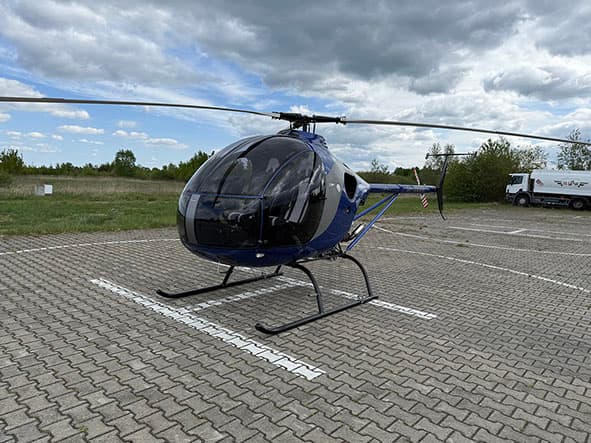
ARGO AH Helicopter Price: AH-22, AH-23 and AH-24
What it costs to buy, and what the manufacturer says it costs per hour
The short answer
From £220,000 with classic instruments, excluding taxes and delivery. That figure is the AH-22, and it is the only one of the three variants with a published from-price.
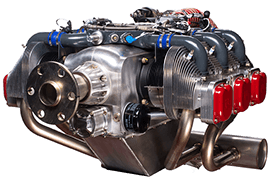
If you arrived here searching for an AH-24 price, here is the honest position: there is not one to publish. The AH-24 carries a 200 hp six-cylinder UL Power UL 520 in place of the 150 hp UL 350, and its external cargo racks and cargo hook are specified per aircraft. A number quoted without knowing the fit-out would be a number invented for the page. Tell us what you need to carry and we will price it.
What we can publish is the part most sellers leave out: the manufacturer's own line-by-line running costs. They are further down this page in full.
Which variant, and why it matters
All three are the same two-seat, 600 kg airframe with a three-blade high-inertia carbon main rotor and a 6.84 m rotor disc. What separates them is the engine - and with it the price and the fuel burn:
| AH-22 | The published from-price. A naturally aspirated 150 hp UL Power UL 350 iHPS on automotive petrol, about 25 l/h. The simplest of the three and the cheapest to run - the one every figure on this page is calculated against. |
|---|---|
| AH-23 | The first helicopter of its kind with the turbocharged ROTAX 916 iS: 141 hp continuous, 160 hp for takeoff, 2,000-hour TBO. Better hot-and-high performance, a higher build cost. |
| AH-24 | The work variant: a 200 hp six-cylinder UL Power UL 520, external cargo racks and a cargo hook option, 120 litres of RON 98 and about 35 l/h. Priced against the fit-out, because the fit-out is the point. |
What it costs per flying hour
These are the manufacturer's figures, published as a fair-basis estimate on a May 2025 costing, taxes excluded, for the AH-22. Labour is reckoned at £99 an hour and petrol at £1.40 a litre; change those and the totals move with them.
| Fuel - PB 95 petrol, 25 l/h | £34.88 per flying hour |
|---|---|
| Engine oil, 0.06 l/h | £1.14 per flying hour |
| Scheduled engine servicing | £0.93 per flying hour |
| Scheduled airframe servicing | £0.62 per flying hour |
| Wearing parts, averaged | £28.76 per flying hour |
| Insurance, hull and liability | 2% of the aircraft value per year |
The line that surprises people is the fuel. A helicopter that burns ordinary PB 95 petrol at 25 litres an hour costs about £35 an hour to feed - roughly what a certified piston helicopter spends on avgas alone before anything else is counted.
And what that comes to in a year
Fixed costs spread across the hours you fly, so the hourly figure falls the more you use the aircraft:
| Usage | Direct cost per year | Per flying hour |
|---|---|---|
| 150 hours a year | £14,585 | £97.23 |
| 300 hours a year | £24,670 | £82.23 |
| 500 hours a year | £38,117 | £76.23 |
A private owner flying 150 hours a year is looking at roughly £14,600 of direct costs. An operator flying it properly - survey, training, utility work - is at £76 an hour.
Inside the wearing-parts figure
That £28.76 an hour is not a guess - it is a parts list divided by its own service life. The heaviest items, and the interval each is replaced or checked against:
| Part | Interval | Parts cost |
|---|---|---|
| Main torsion plates, set | 500 h | £4,320 |
| Main rotor blades, set | 2,000 h | £11,000 |
| Engine, to overhaul | 2,000 h | £10,800 |
| Tail rotor blades, set | 2,000 h | £2,000 |
| Tail torsion plates, set | 2,000 h | £1,500 |
| Drive pulley | 500 h | £891 |
| Drive pulley belts, set | 500 h | £761 |
Two things worth reading carefully. First, those are parts prices only - fitting them is labour on top. Second, the main torsion plates at £4,320 every 500 hours are the single largest hourly line in the whole aircraft, ahead of the rotor blades and ahead of the engine. If you are budgeting seriously, budget for those before anything else.
The full estimate, including the lines not reproduced here, is on the manufacturer's operating-cost sheet (PDF), which we host in full.
What is not on the list
What is missing matters as much as what is there. The AH carries a 2,000-hour conditional TBO with no calendar overhaul of the aircraft or the engine. A certified light helicopter is written down against a clock whether it flies or not; this one is not. For an owner flying 100 or 150 hours a year, that difference compounds harder than any line in the table above.
The airframe is built to comply with EASA CS-VLR, the Certification Specification for Very Light Rotorcraft used across the UK and Europe. The amateur-built category reflects the owner finishing the aircraft at the factory, not a lower engineering standard - every ARGO AH is constructed in the manufacturer's own factory under the direct supervision of licensed professionals, and building at home is prohibited.
One honest number about payload
The AH-22 has a 600 kg maximum take-off weight against an empty weight of about 380 kg, which leaves roughly 220 kg for people and fuel. Full tanks - 2.6 hours with a 10% reserve - are about 47 kg of that. Two adults and full fuel is therefore a sum to do before you fly, not an assumption to make. This is normal for the class and it is the same arithmetic on every two-seat light helicopter; it is simply rarely written down in a price article. If carrying is the job rather than the constraint, that is what the AH-24 exists for.
See what the money buys
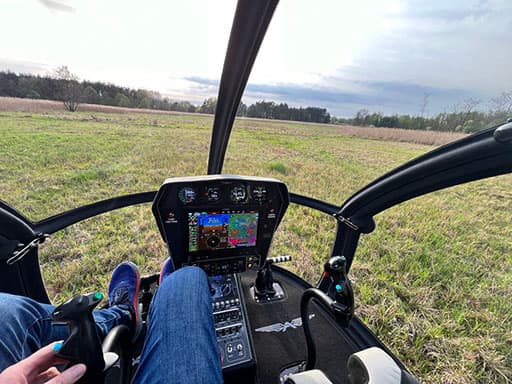
The ARGO AH in the air and on the ground - airframe, cabin and the UL Power engine installation.
Against a gyroplane, and against a certified helicopter
At £220,000 the AH-22 sits well above a gyroplane - an ARGON GTL starts at £165,000 and runs at £89.11 a flying hour against £97.23 here, on the same method - closer than people expect, and it stays up twice as long (the endurance figures are here). You are buying the one thing a gyroplane cannot do: hover. If you do not need to hover, the gyroplane is the better aircraft and the far better economics, and we will tell you so.
If you do need to hover, the comparison that matters is against a certified piston helicopter - and there the AH answers on fuel (car petrol, not avgas) and on the absence of a calendar overhaul. Our wider guide to what rotorcraft cost to buy and run sets out the whole picture.
Read the contract first
Every figure here excludes taxes and delivery. What the deposit covers, when the balance falls due and how a build slot is held are set out in our terms of sale. Read them before you commit to anything.
Full specifications, the three variants side by side and the manufacturer's documents are on the ARGO AH helicopter page.
The other half of the question: what a two-seat helicopter costs to run - and what makes one cheap to run in the first place.
The AH-22 is not a kit - the manufacturer says so in as many words, and what it is instead is not what most people picture.
Frequently asked questions
How much does the ARGO AH-24 helicopter cost?
There is no published from-price for the AH-24. £220,000 excluding taxes and delivery is the AH-22 figure, with classic instruments. The AH-24 carries a 200 hp six-cylinder UL Power UL 520 instead of the 150 hp UL 350, and its cargo racks and cargo hook are specified per aircraft, so it is quoted against your configuration. Ask Argo Aero for a figure against the fit-out you need.
How much does an ARGO AH helicopter cost per hour to fly?
On the manufacturer's own fair-basis estimate, about £97 per flying hour at 150 hours a year, £82 at 300 hours and £76 at 500. Fuel is the largest single line at about £35 an hour, because the AH-22 runs 25 litres an hour of ordinary PB 95 petrol rather than avgas. Figures exclude tax and are quoted on a May 2025 basis.
What is included in the £220,000 from-price?
A complete AH-22 with classic instruments, excluding taxes and delivery. A Garmin G3X glass cockpit, the larger engines and any cargo equipment are specified on top.
Is there a 12-year overhaul like a certified helicopter?
No. The AH carries a 2,000-hour conditional TBO with no calendar overhaul of the aircraft or the engine, so the airframe is not written down against a clock whether you fly it or not. That is the single biggest difference in the cost model against a certified light helicopter.
How much can an ARGO AH carry?
The AH-22 has a 600 kg maximum take-off weight against an empty weight of about 380 kg, leaving roughly 220 kg for people and fuel. A full 2.6 hours of fuel is about 47 kg, so two adults and full tanks is a calculation to run before you fly, not an assumption. The AH-24 is the variant built around carrying things, with external racks and a cargo hook.