

ARGO AH Helicopter
AH-22, AH-23 and AH-24 - a two-seat helicopter, 600 kg MTOW
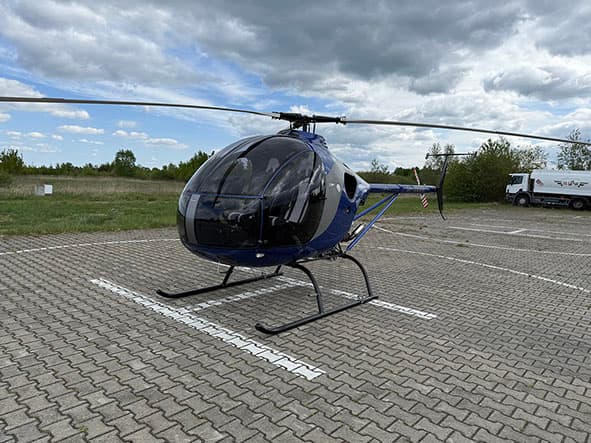
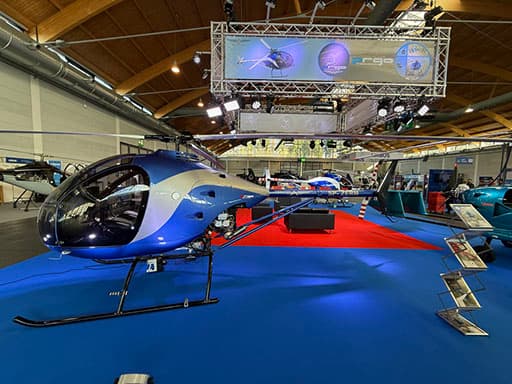
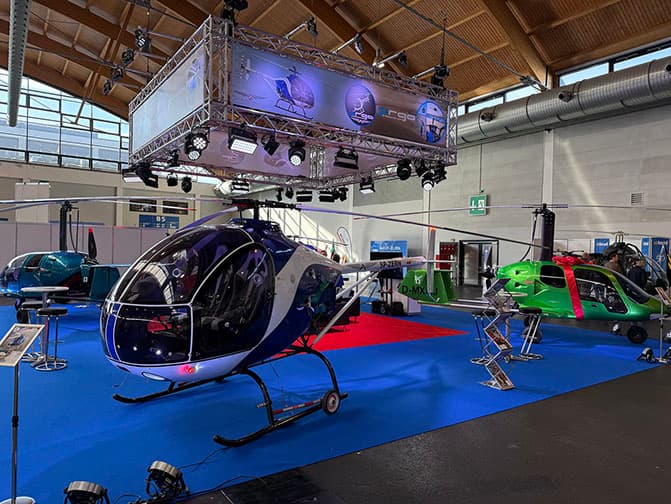
Beyond the gyroplane, Manufaktura Lotnicza also builds a true light helicopter - the ARGO AH. A two-seater with a choice of engines from 150 to 200 hp, a high-inertia carbon rotor and a Garmin G3X glass cockpit, built to EASA CS-VLR standards and finished with the same hand-built precision and luxury as the ARGON range.
Simple power, serious build
The ARGO AH runs on ordinary automotive fuel (95-98 octane) from a 75-litre tank - up to 120 litres with the additional tank - which keeps it economical and easy to operate. On the AH-22's 25 litres an hour that is about three hours in the air. It flies at up to 97 kt (112 mph) - the POH's never-exceed speed - to a 15,000 ft ceiling, and the manufacturer's specification gives 320 km of range including a 10% reserve. Unlike a gyroplane, it takes off and lands vertically in 0 metres. Its titanium-and-composite airframe carries a high-inertia three-blade composite rotor of 8.0 m diameter, engineered to support safe autorotation.
Choose your engine
The ARGO AH is offered in three engine configurations, so you can match power, fuel and running costs to how you fly:
ARGO AH-22
UL Power, 150 hp
Naturally aspirated, running on automotive fuel at around 25 l/h - the simplest and most economical option.
ARGO AH-23
ROTAX 916 iS, 160 hp
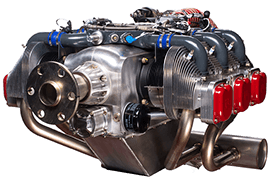
The first helicopter of its kind powered by the turbocharged ROTAX 916 iS: 141 hp continuous, 160 hp for takeoff, around 35 l/h. 2,000-hour TBO.
ARGO AH-24
UL Power UL 520, 200 hp
The work variant: a naturally aspirated six-cylinder, the most powerful of the three, with external cargo racks and a cargo hook option. Up to 120 litres of RON 98 automotive fuel with the additional tank, at around 35 l/h.
Engineered like a big helicopter
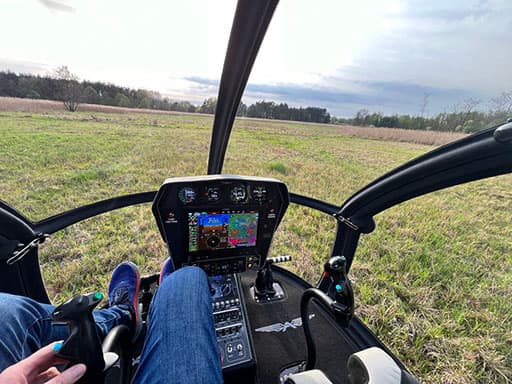
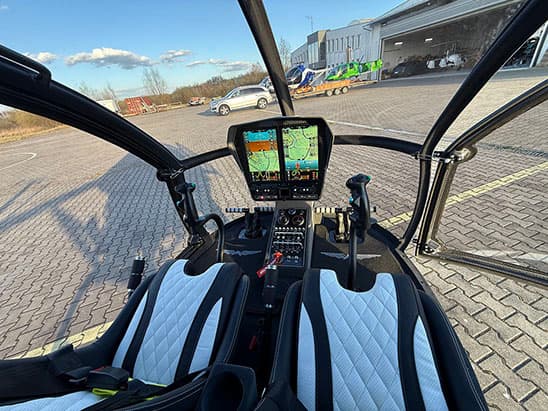
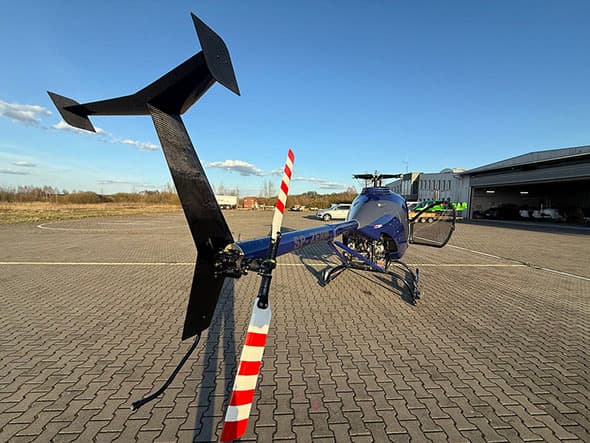
The details are where the AH earns trust. The engines are true aircraft units with all systems doubled, running at a low 2,800-3,500 RPM for long life, and the drive belts are the proven Robinson type with a 2,000-hour replacement life. The slim engine fairing is no styling exercise: wind-tunnel testing showed the turbulence behind unfaired helicopters robs speed and causes vibration, so the AH's fairing is integrated into the cabin and the large luggage compartment. An adjustable governor works with a mechanical correlator (power trim within 65 RPM), the high-inertia carbon rotor blades carry metal leading edges and their weight towards the tips for easy, safe autorotation, and strobe lights work together with the FLARM warning system. Inside: ergonomic bucket seats in leather and alcantara, and Garmin or Kanardia avionics with a three-axis autopilot.
For private owners the cost model is the quiet revolution: a long 2,000-hour conditional TBO and no 12-year calendar overhaul of aircraft or engine - so calendar depreciation is essentially eliminated.
Certification & safety
To demonstrate its airworthiness, the ARGO AH is built to comply with EASA CS-VLR - the Certification Specification for Very Light Rotorcraft used across the UK and Europe - and meets the latest EASA and FAA requirements for very light helicopters. Every airframe uses lightweight titanium and composite, with a high-inertia three-blade carbon rotor engineered to support safe autorotation in the event of an engine failure. A FLARM system provides on-board traffic warning as standard, and the cockpit can be equipped with redundant instruments or dual Kanardia 10" screens.
In the United Kingdom, certification proceeds model by model: the ARGON GTL gyroplane is completing its BCAR-T certification first, and the ARGO AH helicopter is next in our programme - ahead of the ARGON 915 iS. A helicopter is certified to Certificate of Airworthiness standards rather than to BCAR-T, so it is an approval in its own right, calling for a further step up in the factory's systems and processes rather than an extension of the gyroplane one.
Specifications
| Seats | Two, side by side |
|---|---|
| Engine options | UL Power 150 hp / ROTAX 916 iS 160 hp / UL Power UL 520 200 hp |
| Never exceed speed (VNE) | 97 kt (112 mph) - per the POH |
| Range | 320 km on standard tanks, including a 10% fuel reserve |
| Endurance | About 3 hours on the AH-22 at 25 l/h |
| Max altitude | 15,000 ft |
| Fuel | 75 litres standard, up to 120 with the additional tank; automotive 95-98 octane |
| Take-off / landing distance | 0 m (vertical) |
| Max takeoff weight | 600 kg |
| Length / width / height | 6.50 m / 2.25 m / 2.60 m |
| Main rotor | Three-blade composite high-inertia, 8.0 m diameter |
| Airframe | Titanium and composite |
| Avionics | Garmin G3X glass cockpit, three-axis autopilot, FLARM collision warning (Kanardia dual 10" option) |
| Interior | Leather and alcantara |
| Warranty | 2,000-hour / 2-year nose-to-tail; engine TBO 2,000 hours |
Figures from the manufacturer's Standard Specification for the ARGO AH-22.
Manufacturer documentation
A serious aircraft comes with serious paperwork - and the manufacturer publishes it openly. Pilot Operating Handbooks for both engine variants, the Standard Specification and the full brochure:
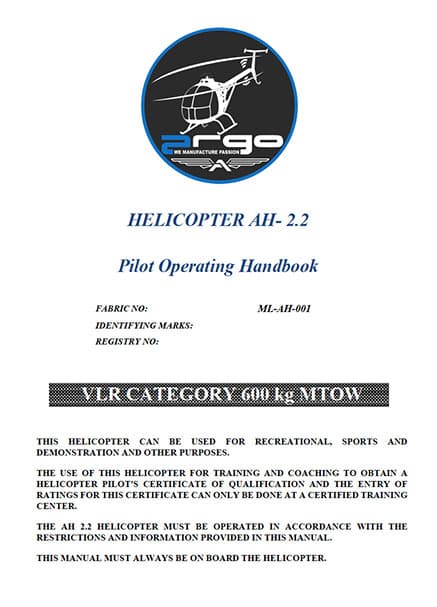
POH - ARGO AH-22
Pilot Operating Handbook for the UL Power-engined AH-22
Open PDF
POH - ARGO AH-23
Pilot Operating Handbook for the ROTAX 916 iS-engined AH-23
Open PDF
Standard Specification
The manufacturer's official AH-22 specification document
Open PDF
ARGO AH Brochure
The full product brochure for the ARGO AH range
Open PDF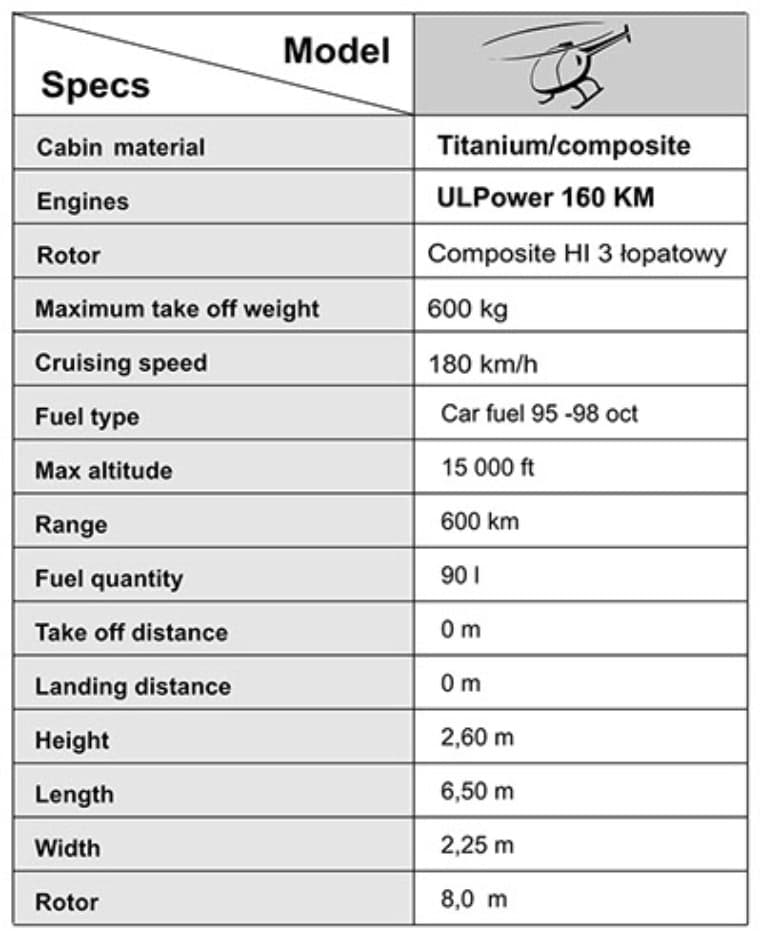
At AERO Friedrichshafen
Every April the world's general aviation gathers at AERO Friedrichshafen in Germany - and the ARGO AH exhibits there alongside the ARGON gyroplanes, sharing the halls with the biggest names in aviation. Read the story and see the behind-the-scenes photos in our report from the show.
In the press
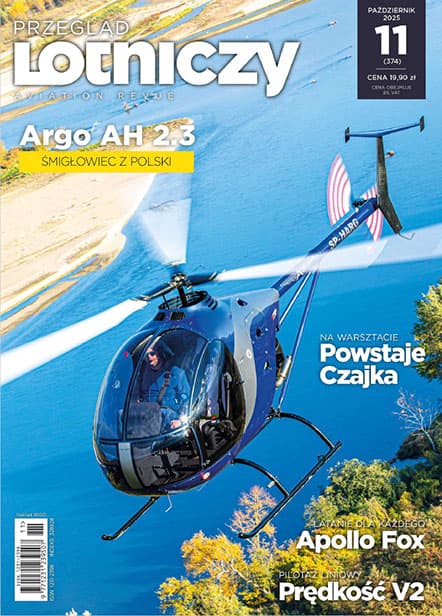
The ARGO AH made the cover of Przegląd Lotniczy (11/2025), Poland's aviation review - "a helicopter from Poland" - and has been featured in the German Flügel magazine.
Read the coverage in English:
Przegląd Lotniczy 11/2025 - cover story (PDF)
Flügel magazine - ARGO AH feature (PDF)
See also Argo Aero's own feature in the British Rotorcraft Association magazine.
Price
From £220,000 with classic instruments, excluding taxes and delivery. What the AH-22, AH-23 and AH-24 cost breaks the number down and publishes the manufacturer's own running costs - about £97 a flying hour at 150 hours a year. As the official UK dealer, Argo Aero will guide you through configuration and ordering - contact us for details, or see our gyrocopters if a gyroplane fits you better. New to the difference? Gyrocopter vs helicopter explains it.
Three more worth reading before you decide: the best two-seat helicopter sets the AH against the R22 and the Cabri on published figures, what a two-seat helicopter costs separates the purchase from the hourly rate, and is the ARGO AH a kit helicopter? answers the question in the manufacturer's own words - no.
Frequently asked questions
How much does the ARGO AH-22 helicopter cost?
The ARGO AH-22 starts from £220,000 with classic instruments, excluding taxes and delivery. It is built at the manufacturer's factory under the supervision of licensed professionals, and the owner finishes the aircraft there as part of the purchase agreement.
How much does the ARGO AH-24 cost?
The published from-price of £220,000 is for the AH-22. The AH-23 and AH-24 carry more powerful engines - the turbocharged ROTAX 916 iS and the 200 hp UL Power UL 520 respectively - and are quoted against your configuration, as is the cargo hook and external rack fit on the AH-24. Our ARGO AH price guide sets out what the from-price includes and what an hour in the air costs. Contact Argo Aero for a figure against the variant you want.
What is the difference between the AH-22, AH-23 and AH-24?
Engine and purpose. The AH-22 has a naturally aspirated 150 hp UL Power running on automotive fuel at about 25 l/h - the simplest and cheapest to operate. The AH-23 is the first helicopter of its kind with the turbocharged ROTAX 916 iS: 141 hp continuous, 160 hp for takeoff, a 2,000-hour TBO. The AH-24 is the work variant, with a 200 hp six-cylinder UL Power UL 520, external cargo racks and a cargo hook option. All three are two-seat, 600 kg MTOW airframes.
What engine does the AH-22 use?
A UL Power 3.5-litre atmospheric piston engine producing 150 hp, running on automotive fuel at around 25 litres per hour - simple, economical and easy to fuel. The AH-23 variant is the first helicopter of its kind powered by the turbocharged ROTAX 916 iS.
How many people does it carry?
Two, side by side, with full fairings and a large luggage compartment. The interior is finished in leather and alcantara.
Is the AH-22 safe in an engine failure?
Its single three-blade rigid rotor uses a high-inertia carbon fibre design that supports autorotation, allowing a controlled descent and landing if the engine stops. A FLARM traffic-warning system is fitted as standard.
What certification standard does the ARGO AH meet?
It is built to comply with EASA CS-VLR, the Certification Specification for Very Light Rotorcraft used in the UK and Europe - the same ICAO-harmonised standards a newly certified helicopter must meet. The amateur-built category reflects the owner finishing the aircraft at the factory, not a lower standard: every ARGO AH is constructed in the manufacturer's own factory under the direct supervision of licensed professionals, and home building is prohibited.
Is the ARGO AH a kit helicopter?
Not in the traditional sense. Rather than building alone at home, owners complete the aircraft inside Manufaktura Lotnicza's factory, on its production equipment, guided by the production staff through comprehensive factory workshops - learning the aircraft's systems and how to keep it airworthy.
Why is the ARGO AH attractive for private owners?
The cost model: a long 2,000-hour conditional TBO with no 12-year calendar overhaul of the aircraft or the engine, so calendar depreciation is essentially eliminated, and ongoing maintenance and insurance costs stay low.