

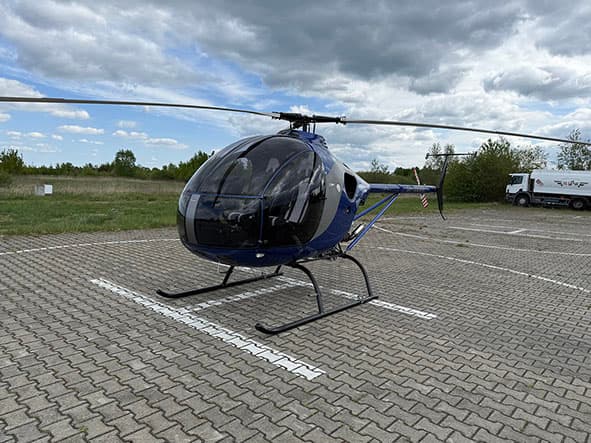
How to Choose a Two-Seat Helicopter
Six tests, in the order that actually decides it - which is not the order most buyers use
There is no single best two-seat helicopter, and anyone who names one is selling it. What there is, is an order in which to judge them - and it is not the order most people use. Purchase price comes near the bottom; fuel type and whether the aircraft carries a calendar overhaul as well as an hourly one come near the top, because those two decide what the aircraft costs over ten years.
Written by Argo Aero UK, United Kingdom dealer for Manufaktura Lotnicza. We sell a two-seat helicopter, so read the examples knowing that - and note that the six tests below work on any aircraft, including ours. No other manufacturer is named here, because the tests are the useful part and their figures are theirs to publish, not ours.
The six tests, in order
1. What fuel does it burn?
The single biggest lever on running cost, and the one people check last. An aircraft certified on ordinary road petrol pays less per litre than one requiring avgas, and can be filled in far more places - which quietly decides where it can be based and how far a day out can go. Our own AH-22 burns about 25 litres an hour of 95-octane unleaded.
2. Is there a calendar overhaul?
Ask whether the airframe and engine carry a life in years as well as in hours. A twelve-year calendar overhaul means an aircraft that sits still is still ageing towards a bill, which punishes the private owner flying fifty hours a year far more than the school flying five hundred. The AH runs a 2,000-hour conditional TBO with no calendar overhaul of aircraft or engine.
3. What is left after empty weight and fuel?
Do this before you fall in love with anything. Take the maximum take-off weight, subtract the empty weight, subtract full fuel, and see who is left. On the AH-22 that is 600 kg less about 380 kg, leaving roughly 220 kg for people and fuel, and 2.6 hours of fuel is about 47 kg. Two adults and full tanks is a calculation, not an assumption.
4. Can you get it maintained near you?
A cheap aircraft with distant support is an expensive aircraft. Ask who does the annual, how far it is, whether parts come from a factory that still makes them, and what a component's lead time looks like in practice rather than in the brochure.
5. What does the licence cost, and have you got it?
The aircraft is the second bill. A UK helicopter licence has a 45-hour CAA minimum and a British average nearer 60 to 90, because the hover is the hardest thing to learn in light aviation. Budget for the licence before the hangar.
6. Where will it actually live?
Hangarage varies more than any other line and nobody can quote it for you. A helicopter needs no runway - take-off and landing distance is zero - which widens the choice considerably, and is worth weighing against a fixed-wing option that needs a strip.
Cheapest to buy is not cheapest to own
This is the trap the first two tests exist to catch. A lower purchase price is paid once. Fuel, overhaul reserves, hangarage and insurance are paid every year, and the aircraft that costs less to buy can easily cost more to keep.
The calendar overhaul is where it bites hardest. If an airframe or engine must be overhauled every so many years regardless of hours, then the owner flying fifty hours a year pays the same as the school flying five hundred - and pays it per flying hour at ten times the rate. Ask the question before the demonstration flight, not after.
What the sums look like on a real aircraft, from the manufacturer's own line-by-line document rather than our estimate, is set out in what a two-seat helicopter costs to buy and run.
The bill people forget: the licence
Buyers budget for the aircraft and the hangar, then discover the licence. A UK helicopter licence carries a 45-hour CAA minimum and a British average nearer 60 to 90 hours, and the reason is one skill: the hover is the hardest thing to learn in light aviation.
It is also the whole reason to buy a helicopter rather than anything else. If you genuinely need to hold still above one point, nothing else does that job and the licence is worth what it costs. If you do not, a gyroplane costs about £30,000 less to be licensed for and runs within nine per cent of the same hourly figure.
Where we stand, plainly
Our own two-seat helicopter, the ARGO AH-22, is not yet certified in the United Kingdom. The ARGON GTL gyroplane is completing its certification first and the helicopter is next in the programme, and a helicopter needs Certificate of Airworthiness approval in its own right rather than an extension of the gyroplane's.
So if you need an aircraft this season, these six tests will serve you honestly against whatever is available now, and we would rather you had them than not. If your timeline is longer, tell us what you are after and we will tell you exactly where our aircraft stands - the question of whether it is a kit included.
Frequently asked questions
What is the best two-seat helicopter?
There is no single answer, and anyone giving you one is selling something. The right aircraft depends on what you will do with it. Judge candidates in this order, because this is the order in which they decide the outcome: what fuel it burns, whether it carries a calendar overhaul as well as an hourly one, what useful load is left after empty weight and full fuel, whether you can get it maintained near you, what the licence will cost you, and where it will physically live.
What is the cheapest helicopter to own?
Cheapest to buy and cheapest to own are rarely the same aircraft. Ownership cost is decided by fuel type, hours flown per year, overhaul reserves and hangarage - not by the purchase price. An aircraft on ordinary road petrol with no calendar overhaul can cost less to keep over ten years than a cheaper one on avgas that must be overhauled every twelve years whether it has flown or not.
What licence do you need to fly a two-seat helicopter in the UK?
A Private Pilot Licence (Helicopters). The CAA minimum is 45 hours and the British average is nearer 60 to 90, because learning to hold a hover is the hardest skill in light aviation and it is where the extra hours go. That gap is also why a helicopter licence costs roughly £30,000 more than a gyroplane one - the difference is the hover, not the aircraft's complexity.
How long does a light helicopter last?
Ask two questions rather than one: the time between overhauls in flying hours, and whether there is also a life in calendar years. The hourly figure is the one owners quote; the calendar figure is the one that catches out anyone flying modestly. The ARGO AH runs a 2,000-hour conditional TBO with no 12-year calendar overhaul of the aircraft or the engine.
Is a two-seat helicopter enough for a family?
Two seats means two people, and after full fuel it can mean two people with very little else. Run the weight sum with real names and real bags before deciding. If the answer is no, the honest options are a bigger aircraft, less fuel and more stops, or a different type entirely - and a gyroplane will not solve it either, since the two-seat ones face the same arithmetic.
Should I buy a helicopter or a gyroplane?
One question settles it: do you need to hover? If you do, nothing else will do that job and a helicopter is worth what it costs. If you do not, a gyroplane costs far less to buy and about £30,000 less to be licensed for, while running costs are closer than people expect - £89.11 a flying hour against £97.23 on the same method, about nine per cent apart.