

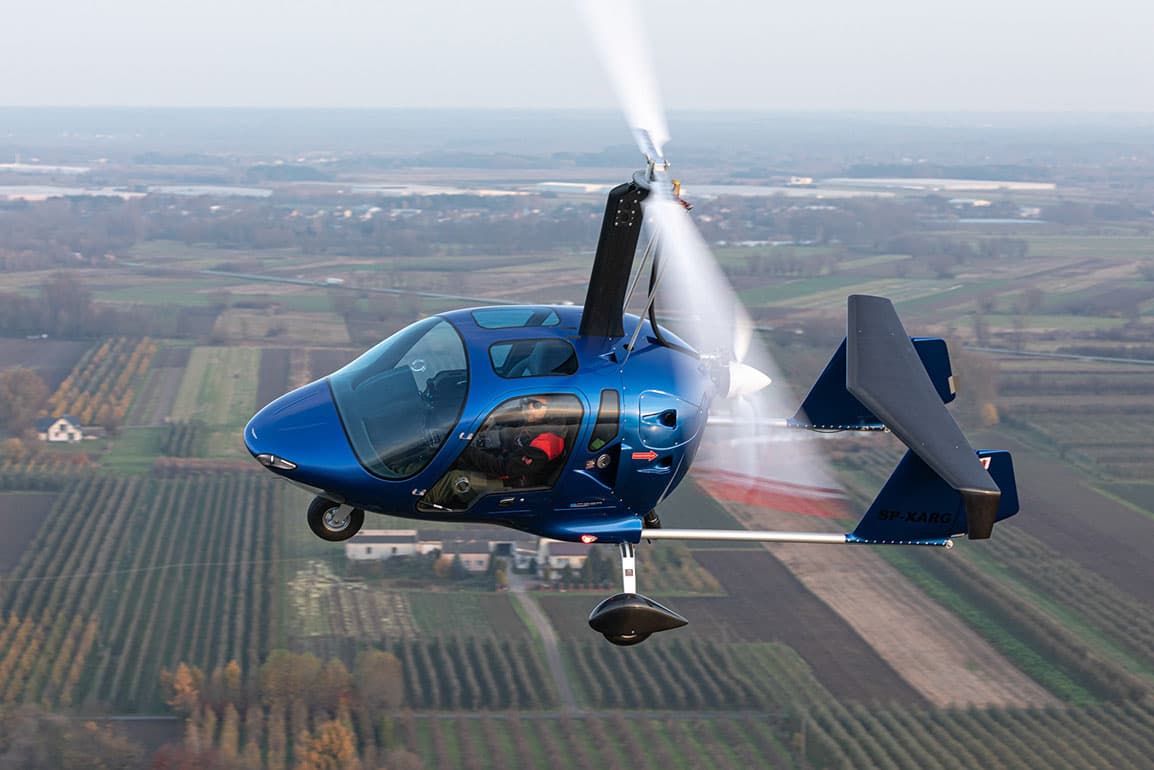
What Is Autorotation?
An emergency in one aircraft, and normal flight in the other
Autorotation is flight in which the rotor is turned by air flowing up through it instead of by the engine. The rotor keeps making lift and the aircraft comes down under control. For a helicopter that is the emergency procedure after an engine failure, entered in seconds and flown once. For a gyroplane it is not a procedure at all: it is how the aircraft flies, always, from take-off to landing.
We sell both kinds of rotorcraft, so the figures below are from the two flight manuals published on this site - our ARGO AH-22 helicopter and our ARGON GTL gyroplane - rather than from the folklore that surrounds this subject.
What actually turns the rotor
In powered flight the engine drives the rotor and the air is pushed downwards through the disc. Take the engine away and, if the aircraft is descending, the flow reverses: air comes up through the disc, strikes the blades at a new angle and drives them round. The rotor becomes a windmill that happens to be holding up an aircraft.
A spinning rotor also stores energy, and that store is the landing. Near the ground the pilot flares, trading rotor speed for one last burst of lift to arrest the descent. It is a single, unrepeatable transaction: the energy that cushions the touchdown is the energy that was keeping the blades turning.
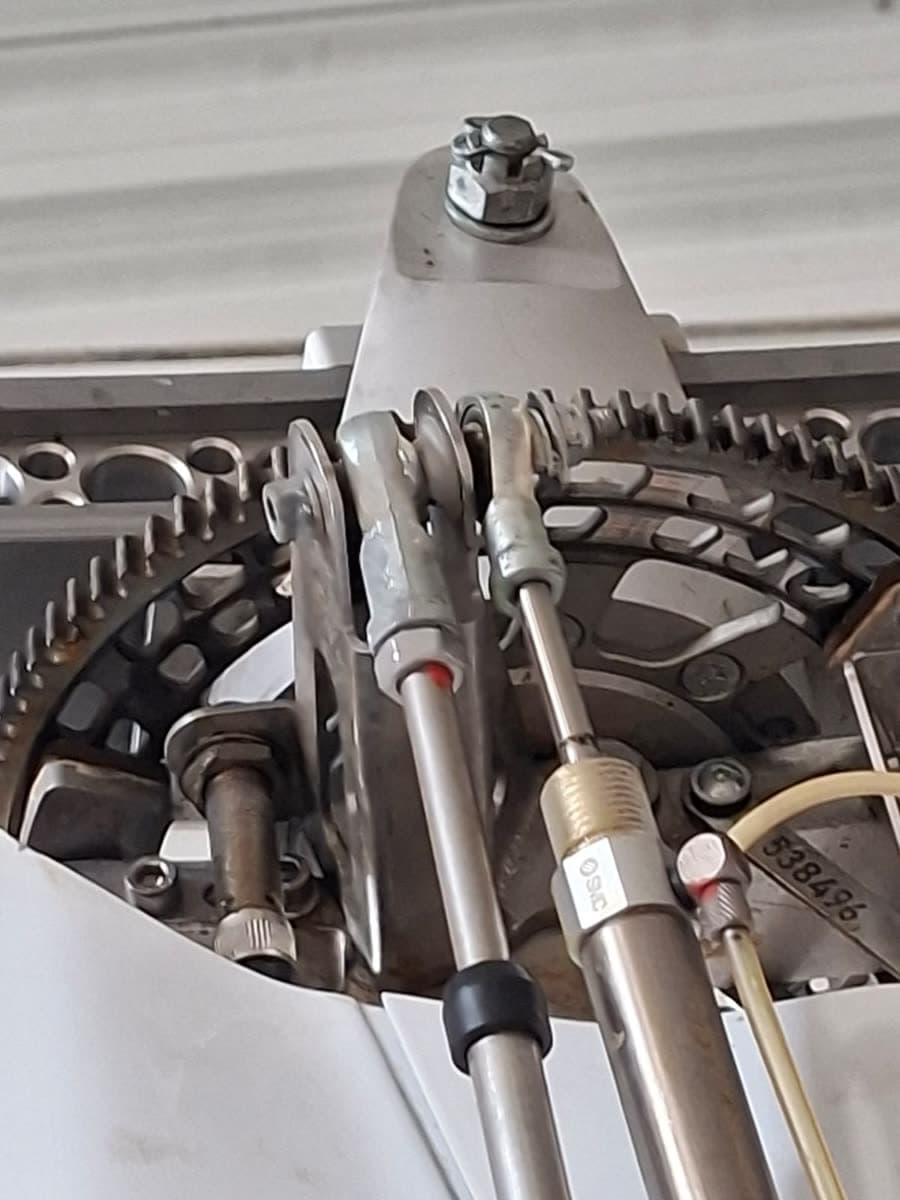
In a helicopter: a procedure, and a clock
When a helicopter's engine stops, rotor speed begins to decay immediately, and the rotor is what keeps the aircraft flying. The pilot lowers the collective at once so that the airflow can take over from the engine, sets the glide speed and starts looking for somewhere to put it down.
Our own AH-22 manual gives that glide as 80 to 130 km/h below 1,000 m, and 100 to 110 km/h higher up, with rotor speed to be held between 480 and 565 rpm. The gearbox has a one-way clutch precisely so the rotor can keep turning with the engine stopped - the machine is built for this. The manual also warns against hovering between 10 and 125 m where the flight does not require it: too low and too slow to complete an autorotation is a recognised trap in every helicopter, and avoiding it is part of flying one.
None of this means a helicopter is fragile. It means the skill is real, it is taught from early in a helicopter licence, and it is practised for the rest of a pilot's life.
In a gyroplane: nothing to enter
A gyroplane has no drive to its rotor at all. The engine turns a propeller, the propeller pushes the aircraft forward, and the airflow through the disc keeps the rotor spinning. Lose the engine and you lose thrust - the lift carries on being made exactly as it was a second earlier.
What follows is a glide, at ordinary approach speeds, with a very steep descent available and a landing roll measured in tens of metres. The GTL will still be flying at 40 kt (47 mph) in that state. There is no manoeuvre to remember and no window in which to remember it, which is the single biggest reason people describe gyroplanes as forgiving - whether that makes them safer is a longer answer, and we give it honestly.
The two aircraft side by side
| Helicopter | Gyroplane | |
|---|---|---|
| Is the rotor driven by the engine? | Yes, in normal flight | No, never |
| When does autorotation happen? | Engine failure, or practice | Every second of every flight |
| What the pilot must do if the engine stops | Enter autorotation at once, within seconds | Nothing to enter - keep flying, pick a field |
| What is lost with the engine | Lift, unless the pilot acts | Thrust |
| Glide speed in autorotation | 80 to 130 km/h below 1,000 m - AH-22 manual | Normal approach speed; VS0 is 40 kt (47 mph) - GTL manual |
| Rotor speed limits in autorotation | 480 rpm minimum, 565 rpm maximum - AH-22 manual | Set by the airflow, not by a lever |
Two things people get wrong
"If the rotor stops, you fall." The rotor does not stop. In autorotation the air keeps it turning as long as the aircraft is moving through it, which is until the landing. What ends a rotor's autorotation is the pilot mishandling rotor speed, not the loss of the engine.
"A gyroplane glides like an aeroplane." It does not, and that is in its favour here. An aeroplane needs a field long enough to fly onto at approach speed; a gyroplane comes down steeply and slowly and stops in a very short distance, which turns a great many more fields into options.
What it means if you are choosing
If you want to hover, you want a helicopter, and autorotation is one of the skills that comes with it. If you do not, the gyroplane gives you the same physics without the emergency procedure - it is the argument underneath our gyroplane versus helicopter comparison, and the reason the gyroplane licence takes 40 hours rather than 45 to 90.
Frequently asked questions
What is autorotation?
Autorotation is a state of flight in which the main rotor is turned by air flowing up through the rotor disc rather than by the engine. The rotor keeps producing lift, and the aircraft descends under control. In a helicopter it is the emergency procedure used after an engine failure; in a gyroplane it is the normal state of flight, at all times.
Can a helicopter land without an engine?
Yes, by autorotation, and pilots practise it throughout training. The pilot must lower the collective within seconds of the failure so that the upward airflow keeps the rotor turning, fly the glide at the speed the manual gives - 80 to 130 km/h below 1,000 m on our own ARGO AH-22 - then flare at the bottom, trading rotor speed for one cushion of lift. It works, and it has to be done correctly first time.
Do gyroplanes autorotate all the time?
Yes. A gyroplane's rotor has no drive to it at all: the engine turns a propeller for thrust, and the rotor is kept spinning by the air passing up through it as the aircraft moves forward. The condition a helicopter pilot has to establish in an emergency is the only condition a gyroplane ever flies in.
What happens if a gyroplane's engine fails?
You lose thrust, not lift. The rotor carries on turning exactly as before, the aircraft becomes a glider with a very steep and very slow approach available, and the pilot picks a field. There is no manoeuvre to enter and no time limit to meet - which is why a gyroplane can land in a remarkably short distance without an engine.
Is the height-velocity curve the same for both?
No. A helicopter has combinations of low height and low speed from which an autorotation cannot be completed - our AH-22 manual says to avoid hovering between 10 and 125 m unless the flight requires it. A gyroplane, already autorotating and flying with forward speed, does not have that trap in the same form.