

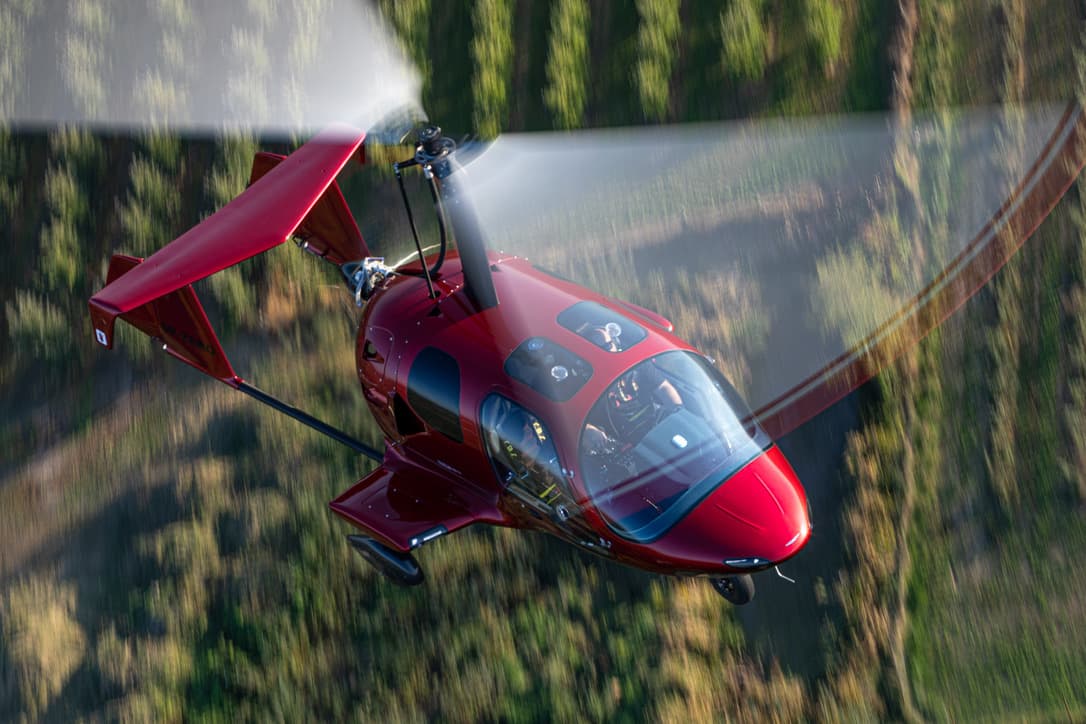
Gyrocopter Weight Limit
How heavy pilot and passenger can be, and what is left for fuel
On the ARGON GTL: 110 kg maximum on one seat, 200 kg maximum on both seats together, 60 kg minimum on a seat, and 600 kg maximum take-off weight for the whole aircraft. Those are operating limits from the flight manual, not suggestions, and they answer the question most buyers are too polite to ask first. A 110 kg pilot flies. Two 110 kg adults together do not - the pair limit runs out before the seat limit does.
Every type has its own numbers. What follows is how to read them on any gyroplane, with ours as the worked example, because the sum is the same everywhere: maximum take-off weight, minus what the aircraft weighs empty, minus fuel, equals people.
The limits that bind
| Maximum take-off weight | 600 kg |
|---|---|
| Maximum load on one seat | 110 kg |
| Maximum load on both seats together | 200 kg |
| Minimum weight on one seat | 60 kg |
| Luggage in the boot | 20 kg |
| Luggage under the seats | 8 kg per side |
All six are from chapter 2 of the ARGON GTL flight manual, which is published in full on this site. Two of them catch people out: the 200 kg limit on the pair, and the minimum.
Why there is a minimum weight
A gyroplane hangs from its rotor, and where the weight sits under that rotor decides how it flies. The manual requires at least 60 kg on a seat because too little weight in the cabin moves the centre of gravity behind the envelope the aircraft was tested in. It is the same reason the manual draws a centre-of-gravity diagram rather than a single number.
For a light pilot flying solo, the answer is ballast, properly secured and in the place the manual specifies. It is a normal part of flying light aircraft and not a sign that something is wrong - but it must be worked out before the first flight, not discovered on the runway.
The sum, with real numbers
Start with the 600 kg maximum take-off weight. Subtract the empty weight of the actual aircraft - not the brochure figure, the one on its weighing report. The GTL manual draws its centre-of-gravity envelope for unladen weights between 340 and 380 kg, which is the band a fully equipped aircraft falls in, so call it 220 to 260 kg left for everything else.
Then fuel. Petrol weighs about 0.72 kg a litre, so every 10 litres you load is about 7 kg off the allowance. Fill to four hours' endurance and you have spent roughly 65 kg of it; take an hour's worth for a local flight and you have spent 16. That single decision moves more weight than most people expect, and it is the one lever you have on the day.
What is left is people and baggage - and here the seat limits apply on top of the arithmetic. Two adults of 85 kg are 170 kg, inside the 200 kg pair limit, and with 20 kg of luggage that is 190 kg of a 220 kg allowance: comfortable with sensible fuel. Two adults of 100 kg are 200 kg exactly, which leaves nothing for baggage and very little for fuel even on the higher allowance.
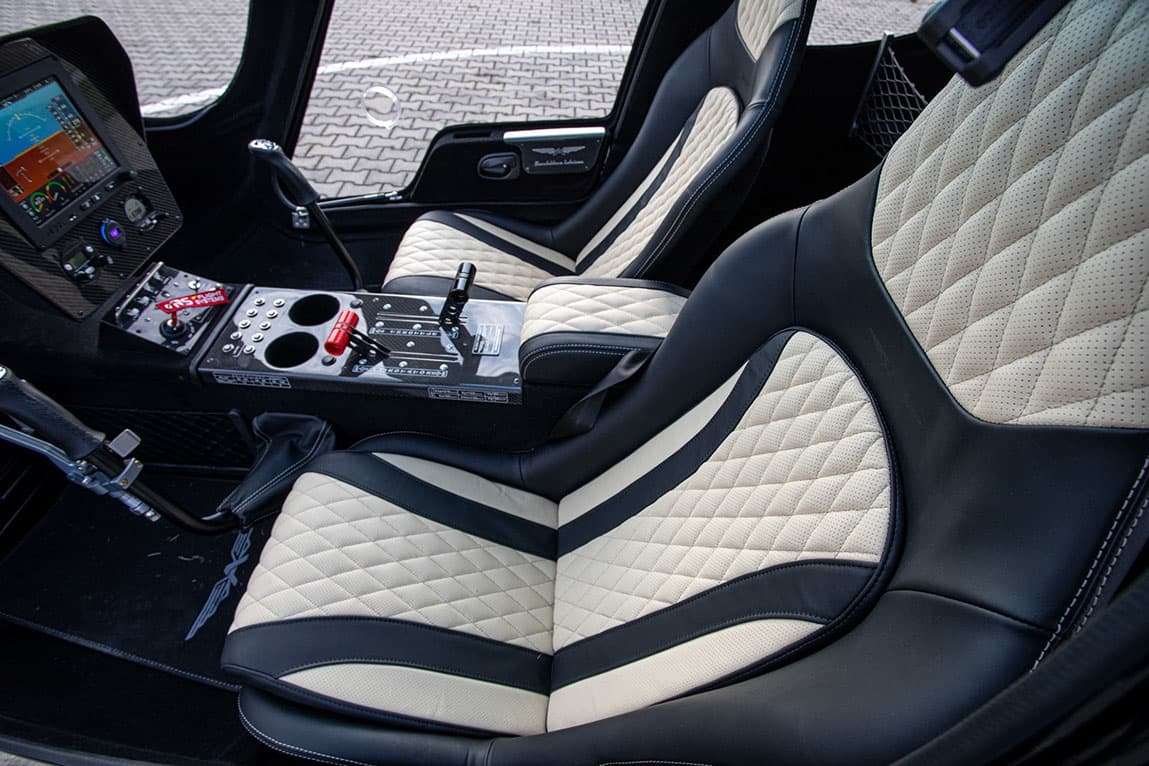
Luggage counts, and where it goes
The GTL has a boot the size of a car's, and its limit is 20 kg, with a further 8 kg a side under the seats. The volume is generous enough to swallow full-size cases, skis or a folding bicycle - which means it is perfectly possible to load more than 20 kg of space and be over the limit without the boot looking full. Weigh the bags at home; the aircraft cannot.
What the rules assume about you
British certification has its own view of what a seat is for. CAP 643 - BCAR Section T, the code UK gyroplanes are approved against - requires each seat to be certified for an occupant weight of 77 kg, or any lower weight for which certification is sought. That is why the same code limits gyroplanes to two occupants and 600 kg, and why four-seat gyroplanes are advertised but not certified.
Your licence, by contrast, says nothing about weight. The UK PPL(G) carries no weight limit of its own - the limits live in the aircraft's manual, and that is where to look.
Before you buy, ask these
What does this aircraft weigh empty, on its weighing report? What is the maximum on one seat, and on both together? What is the minimum? And what is left with full fuel? If a seller answers those four from memory rather than from the manual and the weighing report, ask to see both. With us it is the first conversation rather than the last: tell us what you and your passenger weigh and how far you want to fly, and we will tell you honestly whether the aircraft does it - the range and prices are published, and so is what one costs to run.
Frequently asked questions
What is the weight limit for a gyrocopter pilot?
On the ARGON GTL the flight manual allows a maximum of 110 kg on one seat and 200 kg on both seats together, with a 600 kg maximum take-off weight for the aircraft. So a 110 kg pilot is within limits, and two people of 110 kg and 90 kg are as well - but the pair limit stops two 110 kg adults flying together. Every gyroplane type has its own figures: read the flight manual of the aircraft you will actually fly.
Is there a minimum weight as well?
Yes, and people are surprised by it. The ARGON GTL requires at least 60 kg on a seat. It is a centre-of-gravity limit rather than a comfort one: too little weight in the cabin moves the centre of gravity outside the envelope the aircraft was tested in. A light pilot flying solo may need ballast, and an instructor will tell you where to put it.
How much can a gyrocopter carry in total?
Take the maximum take-off weight and subtract the empty weight of that particular aircraft, which is on its weighing report. The ARGON GTL's manual draws its centre-of-gravity envelope for unladen weights from 340 to 380 kg, so a fully equipped aircraft typically leaves 220 to 260 kg for people, fuel and baggage. Petrol weighs about 0.72 kg a litre, so every 10 litres is about 7 kg of that allowance.
Does my licence limit the weight of gyroplane I can fly?
No. The UK PPL(G) carries no weight limit of its own; its privileges come from the aircraft rating in the licence. The 600 kg figure is the threshold BCAR Section T uses to approve the aircraft, not a restriction on the pilot.
Why does certification assume 77 kg a seat?
Because a seat has to mean a person. CAP 643, the UK's BCAR Section T, requires each seat to be certified for an occupant weight of 77 kg, or any lower weight for which certification is sought. It is the reason an aircraft cannot advertise seats it cannot carry people in.