

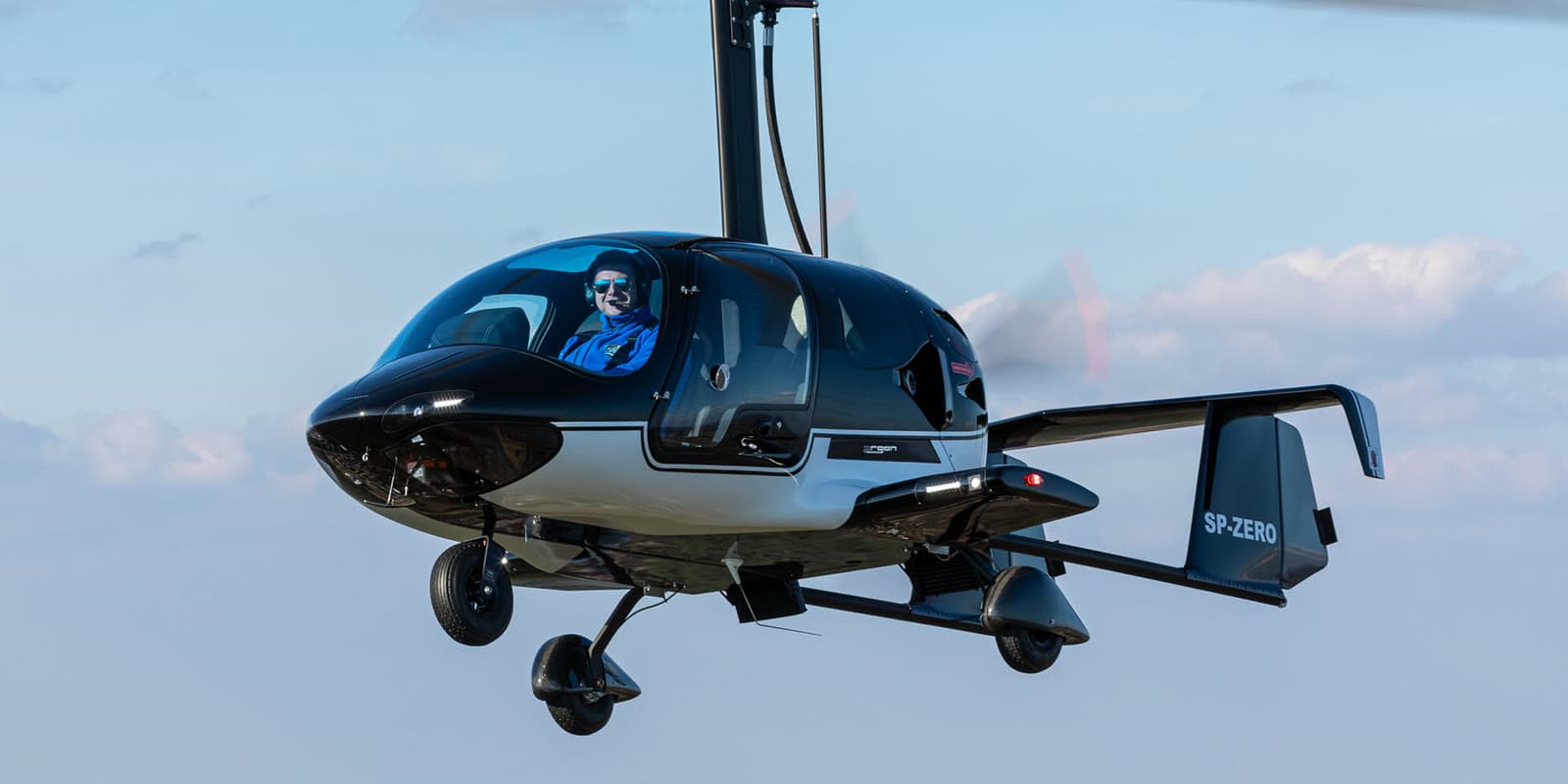
Is There a Four-Seat Gyroplane?
What is advertised, what is certified, and what actually carries the family
Four-seat gyroplanes are advertised, but none we can find holds a type certificate anywhere - and the airworthiness codes that certify gyroplanes do not provide for four seats at all. In the United Kingdom the code is BCAR Section T, and its very first requirement is not more than two occupants. In Europe, EASA's special condition for heavier gyroplanes goes up to 1,000 kg and still stops at two seats. So a four-seat gyroplane is not a machine waiting for a certificate; there is no certificate for it to wait for.
We sell gyroplanes and helicopters, so we have no reason to talk you out of either. What follows is the rule as the CAA and EASA write it, the weight arithmetic that explains why the rule looks like that, and the honest answer to what does carry four people.
What the codes actually say
| Where | Code | Limit |
|---|---|---|
| United Kingdom | CAP 643, BCAR Section T | Not more than two occupants, 600 kg maximum take-off weight, day VMC |
| Europe, heavier gyroplanes | EASA Special Condition SC-GYRO-1 | Two seats or fewer, up to 1,000 kg |
| Germany, ultralight gyroplanes | DAeC type data sheets under BUT | Two seats, side by side |
The British wording is worth reading as it stands, because people quote the weight and forget the seats. Section T "states requirements applicable to gyroplanes having: not more than two occupants; a maximum all-up (take-off) weight not exceeding 600 kg; and restricted to day VMC". Two occupants is a requirement in its own right, not a consequence of the weight.
The arithmetic behind the rule
A gyroplane hangs everything - cabin, engine, fuel, people - under one unpowered rotor. Payload is therefore expensive in a way it is not on a wing, and the numbers on an advertised four-seater tell the story without any help from us.
| Maximum take-off weight of a typical advertised four-seater | 560 kg |
|---|---|
| Empty weight as advertised | About 300 kg |
| Left for people, fuel and baggage | About 260 kg |
| Four adults at the 77 kg used in certification | 308 kg - before any fuel |
Four seats, in other words, are four places to sit rather than four people to carry - the same arithmetic decides how heavy a gyroplane's pilot and passenger can be. Two adults, two children and an hour of fuel is a realistic load for such a machine; four adults and full tanks is not. Section T uses 77 kg per occupant precisely so that a seat means a person, and the same sum is why the honest maximum for this category is three.
Three seats, which does exist
The ARGON GTL Triple seats three - one forward, two behind - on a 700 kg airframe with a 160 hp ROTAX 916 iS, and it is the largest gyroplane we know of that is in production rather than in a brochure. It is also honest about its own position here: at 700 kg and three seats it sits outside BCAR Section T, so in Britain the route is the National Permit to Fly, which allows private flying and not commercial work.
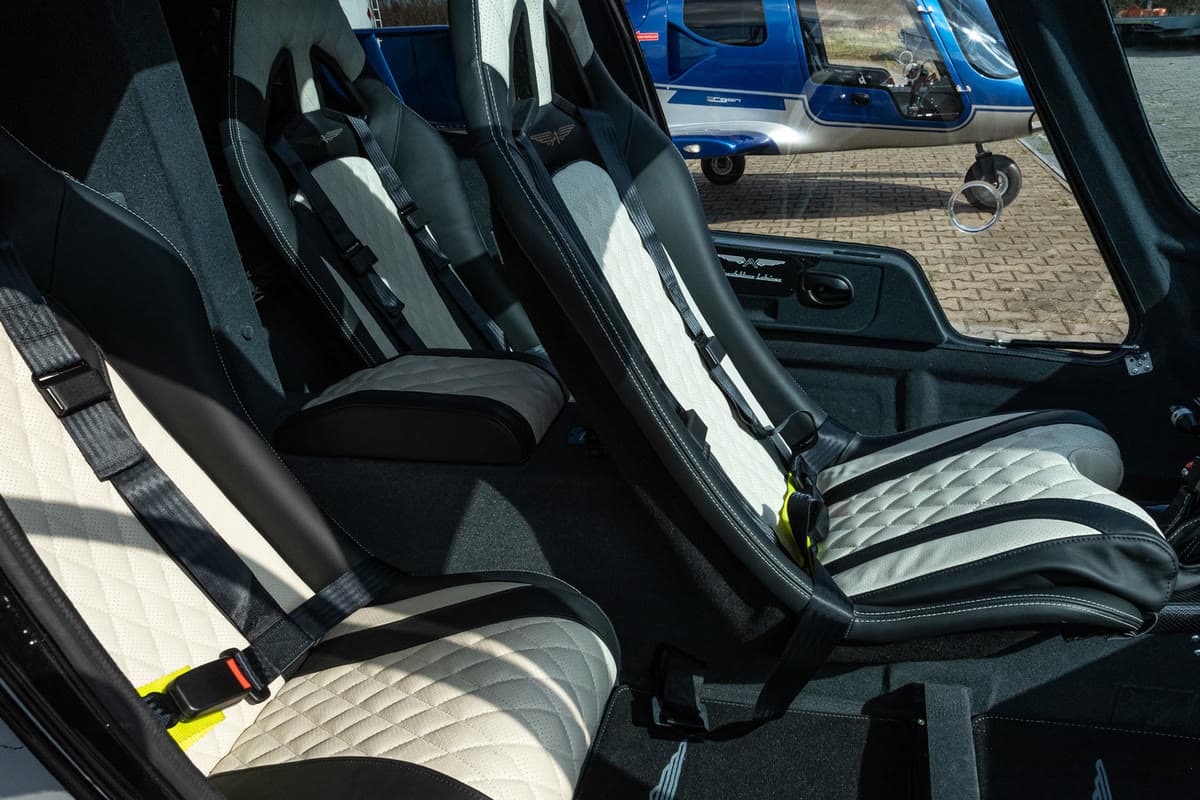
Take the third seat out and the same space swallows a bicycle, a pair of skis or a stretcher - which is what most owners of a three-seat machine actually use it for, most of the time.
If you genuinely need four seats
Then the answer is a four-seat light aeroplane or a four-seat helicopter. Both are certified categories with certified aircraft in them, which means insurance, resale and maintenance all behave normally. A helicopter costs what a helicopter costs - the comparison is here, and we sell both kinds of rotorcraft, so the figures in it are our own on both sides.
What we would not do is buy an uncertified four-seater and hope. An aircraft with no type certificate has no type certificate to inherit when you sell it, a permit is granted on the individual airframe rather than the model, and the day a regulator looks closely is the day the aircraft is worth what somebody will pay for it as a project.
What to ask a seller
Three questions settle it. Which authority issued the type certificate, and what is its number? A certificate has a number and can be looked up; "certified" on its own means nothing. What is the empty weight of this actual aircraft? Not the brochure figure - the one on its weighing report. What can it carry with full fuel? Subtract and see how many adults are left. For the ARGON GTL, every certificate we hold is published with its number on the aircraft's own page.
Frequently asked questions
Is there a four-seat gyroplane?
Four-seat gyroplanes are advertised, but we can find none that holds a type certificate anywhere, and the codes that certify gyroplanes do not provide for one. The UK's BCAR Section T applies to gyroplanes with not more than two occupants and 600 kg maximum take-off weight; EASA's special condition for heavier gyroplanes covers two seats or fewer up to 1,000 kg. The largest certified-route ARGON is the three-seat GTL Triple.
Why not four seats?
Weight, and then paperwork. A gyroplane carries everything on one rotor, and the airframes that keep a useful payload sit between 600 and 700 kg all-up. A 560 kg machine with a 300 kg empty weight has about 260 kg left - four adults at the 77 kg per seat used in certification come to 308 kg before any fuel is loaded. Then there is no code to certify it against.
Can I fly an uncertified four-seat gyroplane in the UK?
Not as a type-approved aircraft. An aircraft without a type certificate can fly in the UK on a National Permit to Fly, granted case by case on the individual airframe, and a permit allows private flying but not commercial air transport, aerial work, or carrying passengers for reward. A permit is never something a seller can promise you in advance.
What carries four people then?
A four-seat light aeroplane or a four-seat helicopter, both of which are certified categories with aircraft in them. If it is the rotorcraft you want rather than the fourth seat, the three-seat ARGON GTL Triple is the closest thing that exists - one seat forward, two behind, on a 700 kg airframe.