

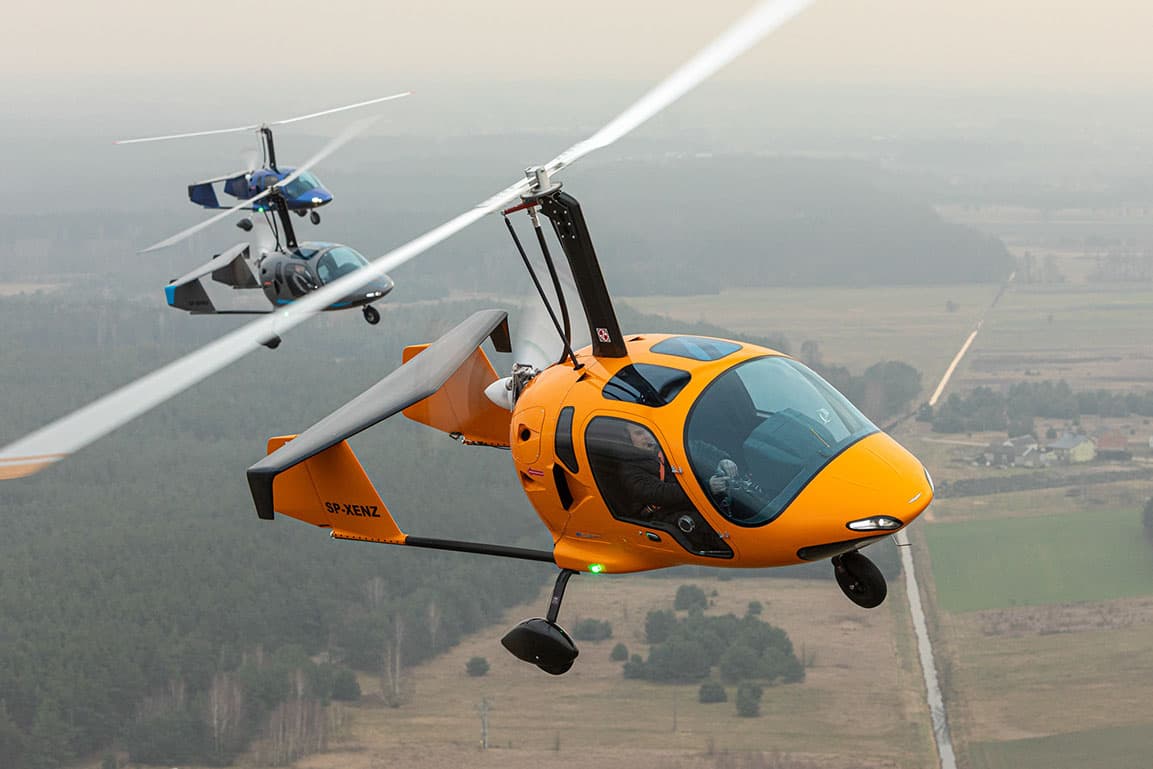
America Opens Its Doors to Factory-Built Gyroplanes
What the FAA's MOSAIC rule changes - and what it does not change here
On 24 July 2026 the certification half of the FAA's MOSAIC rule came into force, and with it something that had not existed in American aviation before: a way to certificate a factory-built two-seat gyroplane.
It is the largest structural change to this category in twenty years, almost nobody in Britain has written about it, and the first thing to say plainly is that it does not change a single UK rule. The reason it matters here is different, and more interesting.
What MOSAIC actually is
Modernization of Special Airworthiness Certification. It rewrites how light-sport aircraft are designed, built, certificated and maintained in the United States, leaning on industry consensus standards rather than a traditional FAA design review of every aircraft.
It was published on 24 July 2025 and arrived in two halves. The pilot and maintenance provisions took effect on 22 October 2025. The aircraft certification provisions - a new airworthiness category, 14 CFR Part 22 - took effect on 24 July 2026. That second date is the one that matters for aircraft.
A rule needs standards to certificate against, and those arrived eight days earlier: on 16 July 2026 the FAA published its notice accepting the ASTM consensus standards that Part 22 runs on. That was the last piece. The framework is now complete and open to any manufacturer who builds to it - the standards are published documents, not a private arrangement.
What the American rule was before, and why it was strange
This is the part that surprises British pilots, because our position has been the opposite for years.
Under the light-sport rules written in 2004, an American sport pilot could fly a gyroplane only if it had been built as amateur-built experimental. There was no light-sport pathway for a factory aircraft - not a difficult one, not an expensive one. There was none. The most powerful aviation regulator in the world had simply never written a route by which a factory could sell a finished two-seat gyroplane to an American customer.
So while Britain has had BCAR Section T and type-approved factory aircraft, America had a nation of homebuilders. MOSAIC ends that. It also drops a rule that had quietly frozen the engineering: a light-sport gyroplane no longer has to use a fixed-pitch, semi-rigid, teetering, two-blade rotor. Designers can now do other things with the rotor, which is where the next decade of development will come from.
What it changes in Britain: nothing, and everything
MOSAIC is an FAA rule. It has no force here. If you are flying or buying in the UK, the legal position on the day after is exactly the position on the day before.
| United States, after MOSAIC | United Kingdom | |
|---|---|---|
| Factory-built two-seat gyroplane | No pathway existed at all | Unchanged - BCAR Section T |
| What a sport / private pilot could fly | Amateur-built experimental only | Unchanged - PPL(G) |
| Weight limit | New performance-based limits | Unchanged - 600 kg |
| Rotor system | Fixed-pitch teetering two-blade required | Never was prescribed |
| Seats | Two, in the light-sport category | Two, and three above 600 kg |
What changes is the market. The biggest general aviation market on earth has been closed to factory gyroplanes for two decades, so the factories built for Europe, in European numbers, at European prices. That constraint has just been removed.
More volume funds more development, and development in this category has always been slow because the volumes were small. The aircraft a British buyer is choosing between in five years will be better than today's because of a rule that does not apply to them.
Who was in the room, and what that tells you
The consensus standards MOSAIC leans on were written with the manufacturers, and the gyroplane names among them are AutoGyro, Magni and SilverLight. That is worth knowing when you read the coverage: the companies that will sell into the new American market helped write the rules it runs on. Not sinister - that is how consensus standards work - but it does tell you who has been preparing for this and for how long.
The caveat, which the excitement tends to skip
There is no MOSAIC-certified gyroplane yet. A manufacturer can only apply for the first of a make and model after 24 July 2026, so applications are only now being made and approvals take as long as they take. Anybody offering you a MOSAIC-certified aircraft today is describing an intention.
And the early aircraft will be built for American requirements and the American market. A British buyer is not in that queue and does not need to be: type-approved factory gyroplanes have been legal, available and flying here for years, which is the one advantage this country has quietly held all along.
Why we are telling you this
Because it is the sort of thing a dealer usually only mentions if it helps the sale, and this one mostly does not. It changes no UK rule, sells no aircraft this year, and the manufacturers who stand to gain most from it are the ones we compete with.
It is still the biggest thing to happen to gyroplanes since 2004, and if you are spending £165,000 on one you should know which way the category is moving. We will report what actually gets certificated as it happens, rather than what was announced.
Frequently asked questions
What is the FAA MOSAIC rule?
Modernization of Special Airworthiness Certification - an FAA rule published on 24 July 2025 that rewrites how light-sport aircraft are certificated, using industry consensus standards rather than a traditional FAA design review. It arrived in two phases: pilot and maintenance privileges on 22 October 2025, and the aircraft certification provisions - a new airworthiness category, 14 CFR Part 22 - on 24 July 2026.
What does MOSAIC change for gyroplanes?
It creates the first route to certificate a factory-built production gyroplane in the United States. Under the 2004 rules a sport pilot could fly a gyroplane only if it had been built as Experimental Amateur-Built; there was no light-sport pathway for a factory aircraft at all. MOSAIC also removes the requirement that a light-sport gyroplane use a fixed-pitch, semi-rigid, teetering, two-blade rotor.
Does MOSAIC change anything for gyroplanes in the UK?
No. MOSAIC is a Federal Aviation Administration rule and it has no effect on UK law. A commercially manufactured gyroplane at or below 600 kg is still Type Approved under the Air Navigation Order in accordance with BCAR Section T, and you still fly it on a UK PPL(G). What changes is the market rather than the rulebook.
Who can apply to certificate a gyroplane under MOSAIC?
The manufacturer, and only the manufacturer. The FAA is explicit that only the person who designs and produces the aircraft, with the personnel and documentation to show compliance, is its manufacturer - and only the manufacturer may sign the statement of compliance for each aircraft delivered. A dealer or distributor cannot hold it. The standards themselves are published and open to anyone who builds to them.
Can I buy a MOSAIC-certified gyroplane now?
Not yet, and be wary of anyone who says otherwise. A manufacturer can only apply for the first of a make and model after 24 July 2026, so the applications are only now being made. Expect the first certificated aircraft to take time, and expect the early ones to be American-market machines.