

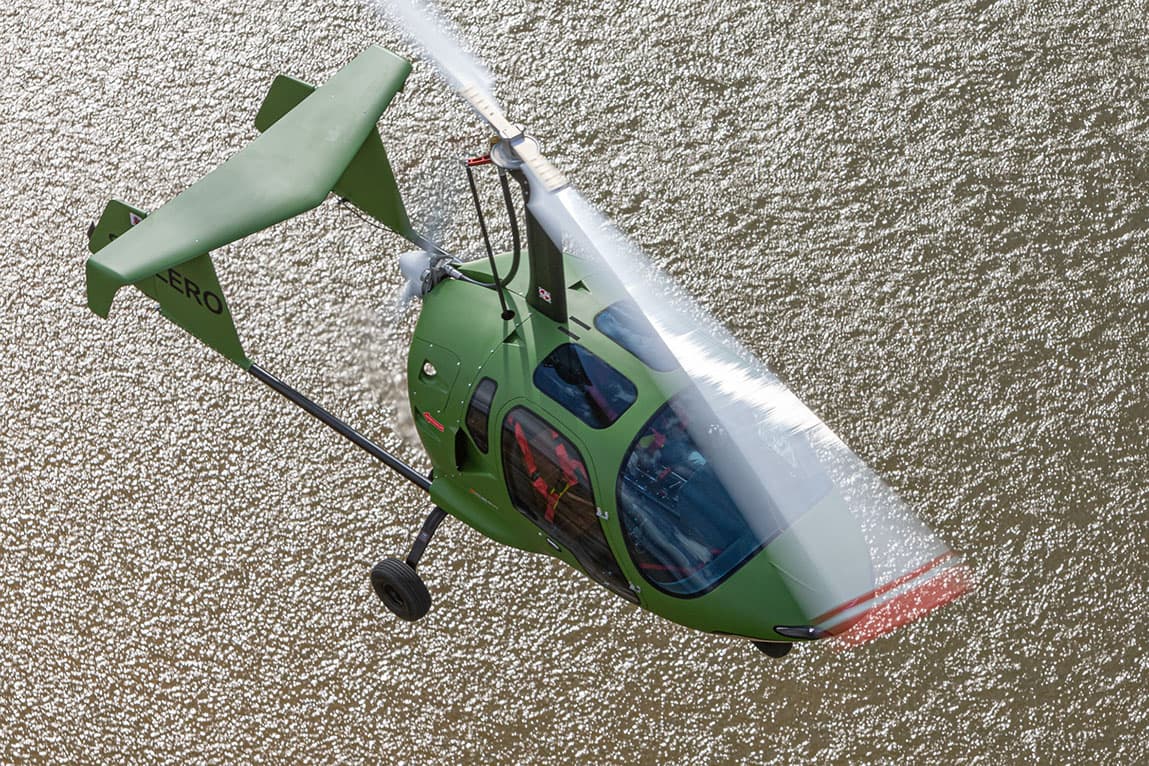
Amphibious Gyrocopters: Can a Gyroplane Land on Water?
Yes - and the aircraft is better suited to it than almost anything else with a propeller
People ask this more often than you would expect, and the short answer is that gyroplanes on floats exist, fly, and are a genuinely good idea. Amphibious ones - floats with wheels that retract into them, so the aircraft uses both water and a runway - exist too.
One is already on sale: AutoGyro's Cavalon Amphib, an enclosed side-by-side gyroplane on floats with retractable gear, sold for work where an aircraft has to operate off both land and water. We would rather name a competitor than let you think the idea is theoretical.
What you cannot do today is buy an ARGON with them. It is on the manufacturer's list of intentions rather than its price list, and we would rather say that in the second paragraph than in the small print. What follows is why it is a serious ambition and not a brochure line.
Why a gyroplane suits floats better than an aeroplane does
The hard part of operating off water is not the landing. It is the run. A floatplane has to accelerate across the surface until the wing will fly, dragging two hulls through the water the whole way, which is why floatplane pilots talk about long fetches, glassy water and calm mornings.
A gyroplane needs almost none of that. Its rotor is already turning before it moves, it leaves in a few dozen metres, and it arrives slowly and steeply rather than fast and flat. Put those together and small lakes, sheltered inlets, reservoirs and wide rivers stop being marginal and start being usable.
The same argument runs the other way round on the ground, which is the point people miss: an aircraft that needs no runway does not need a runway made of water either. Floats simply extend the list of surfaces it will accept.
And clean snow, which is the same idea with less weight
Skis are the other half of the ambition, and in engineering terms they are the easier half. A set of skis weighs a fraction of what a pair of floats weighs, so the payload penalty is small. And a slow, steep arrival is precisely what you want on fresh snow, where a fast flat approach is how aircraft get into trouble.
This is not a British idea. It is a Scandinavian, Canadian, Alaskan and high-Alpine one - places where for months of the year the flattest, cleanest, most obvious landing surface for hundreds of miles is snow, and where an aircraft that can use it goes places that other aircraft simply cannot reach.
The constraints, before the vision
None of this is free, and the numbers are unforgiving in a way that is worth understanding.
- 600 kg is a hard ceiling. An aircraft certified under BCAR Section T must stay at or below 600 kg all-up. Floats are heavy, and every kilogram of float is a kilogram of fuel or passenger you no longer have. This is the whole design problem in one line.
- Floats cost speed and endurance. They hang in the airflow for the entire flight, not just the two minutes they are used. Some of the five hours of endurance would go.
- Spray and a rotor need thinking about. Water thrown up during the run has to go somewhere that is not through a rotor disc or a propeller.
- It needs its own approval. The wheeled aircraft's does not carry across. A float variant is a new configuration and has to be approved as one.
What it says about the company
Manufaktura Lotnicza is a small factory that builds by hand, and it has a habit of doing the thing nobody had done yet. It built the first Grand Turismo gyroplane when the category was open frames and helmets, put the ROTAX 916 iS into a gyroplane and then into a helicopter, and built a three-seat gyroplane when everybody else stopped at two.
Water and snow are the same instinct pointed at the ground rather than at the cabin. The gyroplane's defining advantage is that it does not need a runway - so the question the factory is asking is why it should need dry land either. A machine that already lands in a few dozen metres on grass is the obvious candidate to land on a lake, or on a snowfield, and to do it somewhere no aeroplane can follow.
Where it stands today
Plans, not products. There is no price, no date and no specification we would be willing to put in writing, and we are not going to take a deposit against an intention.
What we will do is put you on the list. If floats or skis are the reason you would buy one of these aircraft rather than a curiosity, say so - the factory builds by hand, one aircraft at a time, and a small number of people asking for the same thing is exactly how these programmes get their order of priority. In the meantime, the enclosed aircraft we do sell will already put you down on a few dozen metres of grass, which is most of the freedom people are after.
Frequently asked questions
Can a gyrocopter land on water?
On floats, yes - gyroplanes fitted with floats exist and fly, and amphibious ones with retractable wheels exist too. A standard wheeled gyroplane cannot: it is not a flying boat and an unplanned arrival on water is a ditching like any other. What makes the gyroplane a natural candidate for floats is that it needs very little run and arrives slowly and steeply, so a short stretch of sheltered water is enough where an aeroplane would want a long one.
Is there an amphibious gyrocopter for sale?
Yes - and we will name it, because you would find it anyway. AutoGyro sells the Cavalon Amphib, an enclosed side-by-side machine on floats with retractable gear, aimed at coastal patrol work where operating from both land and water matters. Manufaktura Lotnicza does not sell a float or amphibious ARGON today; it is on the company's list of intentions rather than its price list. If floats are the reason you would buy, tell us and we will put you on the list to hear first - and if you need one this year, the honest answer is that ours is not it.
Why would you put a gyroplane on floats rather than an aeroplane?
Because the take-off and landing run is the thing floats make hardest, and it is the thing a gyroplane needs least of. A floatplane needs a long, clear, calm stretch of water to unstick. A gyroplane arrives steeply and slowly and leaves in a few dozen metres, which turns small lakes, sheltered inlets and rivers into usable places rather than marginal ones.
What are the drawbacks of floats on a gyroplane?
Weight and drag, and under UK rules that is not a small matter. An aircraft certified under BCAR Section T has to stay at or below 600 kg all-up, so every kilogram of float is a kilogram of fuel or passenger you no longer have. Floats also cost cruise speed and endurance, spray and a rotor need careful design, and a float variant needs its own approval - the wheeled aircraft's does not carry across.
Can a gyrocopter land on snow?
On skis, the same logic applies and rather more easily - skis weigh a fraction of what floats weigh, so they cost far less payload. A gyroplane's slow, steep arrival suits fresh snow, where a fast, flat approach is exactly what you do not want. It matters in Scandinavia, Canada, Alaska and the high Alps rather than in the south of England, which is why it is a serious idea and not a novelty.