

Enclosed Gyrocopters: Pros, Cons and the Goggles Era
The single biggest disadvantage of a gyroplane is one you can simply buy your way out of
Ask what is wrong with gyroplanes and the honest first answer is not about safety, or speed, or the licence. It is that most of them are open to the weather. You dress for it. You wear goggles or a visor because at eighty knots the airflow is not a suggestion. And in a British February the flight lasts as long as you can stand it rather than as long as the fuel.
There is a good precedent for how this ends. Early motor cars were open too, and everybody drove in goggles and a coat - not because drivers were hardier then but because nobody had built the roof yet. When they did, the goggles disappeared within a generation and nobody has since argued for going back.
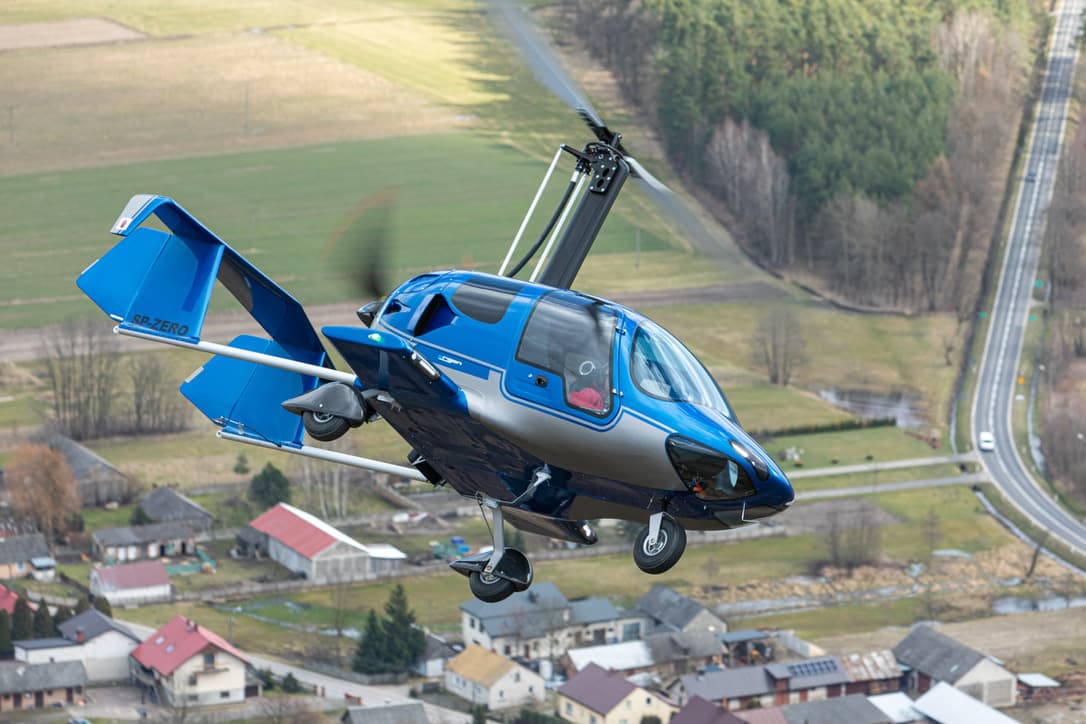
Gyroplanes are somewhere in the middle of that same change. The enclosed ones exist and have for years. Most people simply have not seen one.
Open cockpit against enclosed cabin
Set them side by side without flattering either. The open aircraft is lighter, cheaper and there is a real pleasure in flying one - this is not a list of faults, it is a list of what the roof buys. We weigh the two against each other in open cockpit or enclosed, helmet against headset included.
Open cockpit
You dress for the temperature at altitude, not the one on the ground - and it is colder up there in every month of the British year.
Enclosed cabin
Heating and ventilation. You fly in what you arrived in, and you arrive able to shake hands rather than needing ten minutes to thaw.
Open cockpit
Goggles or a visor, and a helmet. At 80 knots the airflow is not optional and neither is eye protection.
Enclosed cabin
A headset, and that is all. Nothing between you and the view but the glazing.
Open cockpit
Rain is genuinely painful at speed, so a shower that a car would shrug off ends the flight.
Enclosed cabin
A shower is a nuisance rather than a reason to land, though a gyroplane is still a day-VFR aircraft and always will be.
Open cockpit
The flight lasts as long as you can stand it, which in February is not very long at all.
Enclosed cabin
The flight lasts as long as the fuel - five hours and two minutes in an ARGON GTL, which is only useful if you can sit through it.
Open cockpit
Conversation is by intercom over a lot of noise, and a passenger who is cold is not enjoying themselves.
Enclosed cabin
You can talk. Which sounds trivial until you take somebody up who has never flown before.
Notice that the last two are the same point twice. An aircraft with five hours of endurance is only worth the fuel it carries if the cabin lets you use it. Range and comfort are not separate specifications - the second one is what makes the first one real.
The disadvantages a roof does not fix
We would rather list these ourselves than let you find them later.
- Two seats. Not four. If you need to move a family, this is the wrong aircraft and no cabin changes that.
- Day VFR. Glazing keeps the rain off you; it does not let you fly in cloud. Low visibility keeps a gyroplane on the ground.
- It cannot hover. A helicopter can hold still over one point and land vertically into a clearing. A gyroplane needs a short run and always will.
- The rotor is handled on the ground. In wind that takes correct technique. It is a skill taught in the course, not a hazard, but it is real and it is why the licence takes 40 hours.
An enclosed gyroplane against a helicopter
Once the cabin is enclosed, heated and trimmed in leather, the comparison people reach for is no longer the open gyroplane - it is the small helicopter. We sell both, so here it is with the figures from the manufacturer's own cost documents, which we host on this site.
- Speed - the gyroplane, narrowly. The GTL's never-exceed speed is 113 kt against the ARGO AH's 97 kt, and the ARGON 915 iS is the same 113 kt. The common belief that a gyroplane is the slower machine does not survive the type documents.
- Endurance - the gyroplane, decisively. Five hours and two minutes against about two and a half, and 757 km against 320.
- Price - the gyroplane, by £55,000. £165,000 against £220,000, and £125,000 for the 915 iS.
- Hourly cost - closer than you would think. £89.11 against £97.23 at 150 hours a year, about 9% apart on the same method. Both burn 25 litres an hour. Anyone telling you a gyroplane runs at a third of a helicopter's cost is comparing its fuel bill against the helicopter's total.
- The hover - the helicopter, absolutely. There is no argument here and we will not invent one.
So the case for the enclosed gyroplane is not that it is a cheap helicopter by the hour. It is that it costs £55,000 less to buy, stays up twice as long, goes slightly faster, and puts you in a cabin of much the same standard - and the price of all that is the hover.
What one actually looks like
A finished ARGON GTL, nose to tail: the enclosed carbon cabin, the engine bay, the Garmin panel and the leather inside.
Buying an enclosed gyrocopter in the UK
Both aircraft we sell are fully enclosed as standard rather than as an option: the ARGON 915 iS from £125,000, and the ARGON GTL from £165,000 with the roomiest cabin in the ARGON range. Carbon fibre, heating and ventilation, hand-stitched leather, Garmin glass and a three-axis autopilot in both.
The other two enclosed machines you will be looking at are the AutoGyro Cavalon and the Magni M24 Orion - all three compared on their makers' own figures.
Second-hand enclosed machines are scarce - there are far fewer of them than open ones and the people who have them tend to keep them - so if that is what you are after, tell us and we will watch for it rather than leaving you to the classifieds - and if you are looking at the used market, that is worth reading first. If you want to sit in one before deciding, here is where that stands in the UK.
And the roof is not where the factory intends to stop. The next idea is to take the aircraft off dry land altogether - floats first, then skis on clean snow.
Frequently asked questions
Is there a fully enclosed gyrocopter?
Yes, several - and both of the aircraft we sell are. The ARGON 915 iS and the ARGON GTL have carbon fibre enclosed cabins with heating, ventilation, leather seats and a Garmin glass panel with an autopilot, closer to a small helicopter cabin than to the open-frame machines most people picture. The open kind is still the more common sight at a British airfield, which is why the assumption persists.
Where can I find an enclosed gyrocopter for sale?
New from the factory, an ARGON 915 iS starts at £125,000 and an ARGON GTL at £165,000, both fully enclosed as standard rather than as an option. Used enclosed machines come up rarely because there are far fewer of them than open ones and owners tend to keep them. We are the official UK dealer, so ask us what is available rather than watching the classifieds.
What are the disadvantages of gyrocopters?
Four, plainly. Most are open cockpit, so you dress for it and the flight is as long as you can stand - which is the one this whole article is about, and it is solved by buying an enclosed one. They carry two people, not four. They are day VFR, so they will not take you anywhere in weather. And the rotor has to be handled correctly on the ground in wind, which is a skill rather than a hazard but has to be learned.
Can you fly a gyrocopter in the rain?
In an open cockpit, not comfortably - rain at 80 knots is painful and it ends the flight. Behind glazing it is a nuisance rather than a reason to land. Neither answer changes the rule that matters more: a gyroplane is a day-VFR aircraft, so poor visibility and low cloud keep it on the ground whatever the cabin is made of.
Are gyrocopters hard to fly?
Not hard, but thorough. There is no stall to mishandle and the landing is slow and steep rather than fast and flat, so a short strip is forgiving. What the UK licence asks for is 40 hours and 38 exercises, including proper rotor handling on the ground - the flying itself is straightforward and the training is not rushed.
Is an enclosed gyrocopter cheaper than a helicopter?
To buy, substantially - an ARGON GTL is £165,000 against £220,000 for an ARGO AH. To run, much less than people assume: on the manufacturer's own like-for-like method the gyroplane is £89.11 a flying hour at 150 hours a year and the helicopter £97.23, which is about 9% apart. The gyroplane's real advantages over a helicopter are the purchase price and the endurance - five hours against about two and a half.