

Tesla Autopilot vs Aircraft Autopilot
Both machines will steer themselves. Only one of them has the M20 in the way.
People give sensible reasons for buying a Tesla - the running costs, the charging network, the tax on a company car. Then they get you in the passenger seat and the first thing they show you is the autopilot. It is the reason underneath the reasons.
We own two machines with autopilots too. One is a Sling TSi, a four-seat aeroplane; the other is the ARGON GTL gyroplane we sell. This is what the same idea looks like when you take the traffic away.
The two autopilots are not the same machine
It is worth being precise here, because the honest comparison is more interesting than the flattering one.
Tesla's Autopilot is the harder engineering by a distance. It reads lane markings, tracks the car in front, watches for the cyclist you have not seen and the child who has not looked. It has to. A road is a narrow strip crowded with things that will kill you, most of them moving, several of them distracted.
An aircraft autopilot is far simpler, and that is the point. Ours is a Garmin three-axis unit in both aircraft: it holds a heading, holds an altitude, and flies the track you loaded before you started the engine. It does not need to see anything. At 2,000 feet over Kent there are no lanes, no roadworks, no junctions and, on most afternoons, nothing else within several miles.
So the comparison is not which autopilot is cleverer. Tesla's is, easily. The comparison is that one of them solves a desperately hard problem, and the other one is flying in a place where the problem was never created.
Nobody up there is having a bad day at your expense
This is the part people who have not flown do not anticipate, and the part pilots miss most when they are back in the car.
On the radio, everyone says where they are and what they intend to do next, and then does it. Nobody undertakes. Nobody sits on your tail. There is no lane to be in, so there is nothing to be cut up out of. When two aircraft want the same piece of sky, one of them says so and the other one goes round, and neither takes it personally.
Some of that is training and some of it is consequence. But most of it is simpler: nobody is up there who does not want to be up there. Every person in the circuit on a Saturday chose this, paid for it and worked for it. There are no reluctant commuters in the sky, and it shows in how people behave.
Lunch in France, and what the day actually costs you
Here is the arithmetic that makes the case better than any of the above. The Tesla will do all of these journeys. It will just spend your whole day doing them.
| By road | In the Sling | |
|---|---|---|
| Kent to Le Touquet, France | About 4 hours each way by road and tunnel | About 35 minutes |
| London to the Dutch coast | 7 to 8 hours each way | About 1 hour 15 |
| London to Cornwall | 5 to 6 hours on a Friday | About 1 hour 20 |
| London to the Isle of Wight | 3 hours and a ferry queue | About 40 minutes |
Eight hours to the Netherlands and eight hours back is not a day out, it is a weekend spent on a motorway. An hour and a quarter each way is lunch, a walk and home for the evening. That is not a faster version of the same trip - it is a different trip, and it is the one people take again.
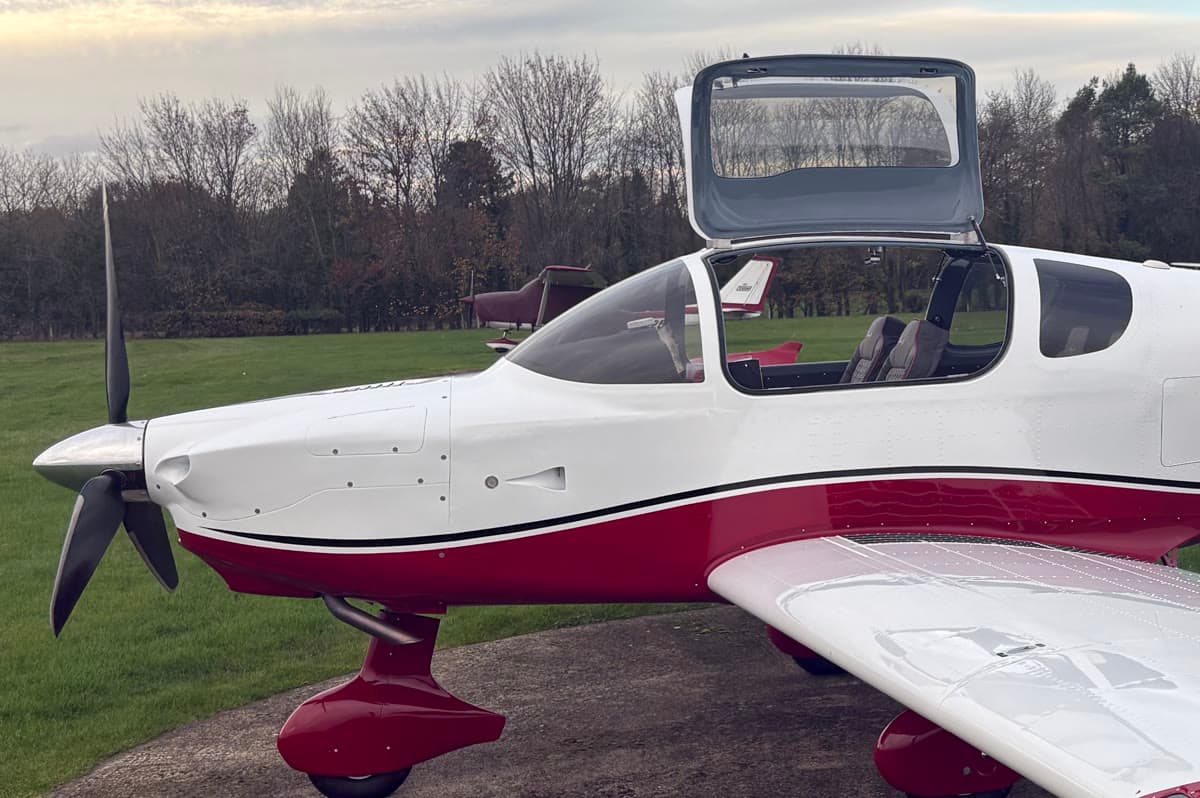
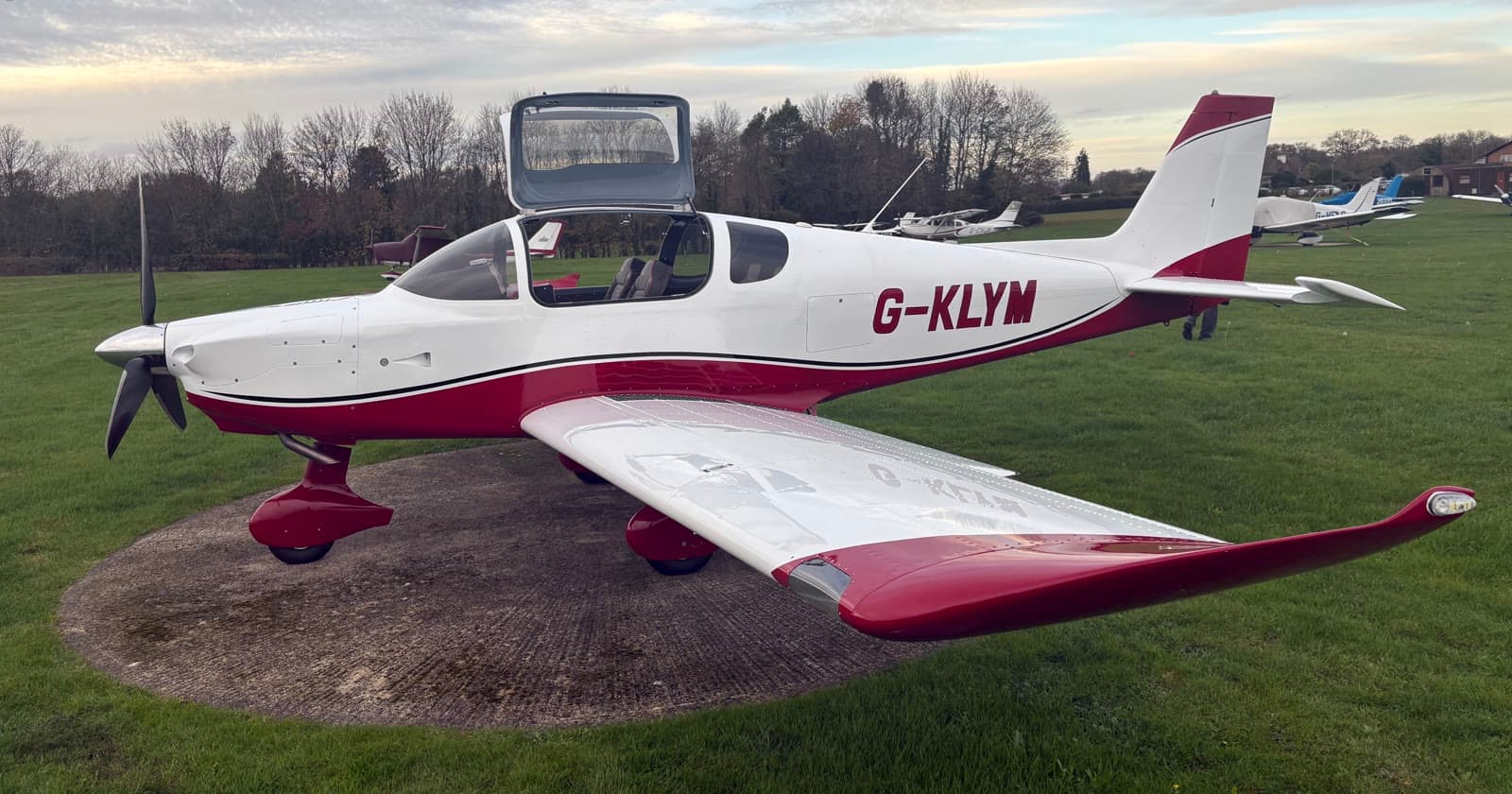
Our Sling TSi. Garmin glass, three-axis autopilot, four seats, and the same ROTAX 916 iS that is in the gyroplane.
The paperwork, said plainly rather than skipped
Crossing the Channel in a light aeroplane is routine and has been for decades - Le Touquet is the classic British day trip - but it is not quite as casual as driving onto a ferry. You file a flight plan, submit a General Aviation Report to UK Border Force before you go and before you come back, carry lifejackets for the water, and check what your particular aircraft's permit allows in the country you are landing in. It is an evening of admin the first time and twenty minutes every time after that.
The gyroplane is a different case, and we will not blur it. The CAA states that a UK gyroplane licence can only be used on UK-registered gyroplanes inside UK airspace, unless you have an agreement with the aviation authorities in another country, and France licenses gyroplanes under its own ULM system rather than recognising ours. So the honest division of labour between our two machines is this: the aeroplane is the one that crosses water, and the gyroplane is the one that goes anywhere in this country, including the great many places that have no runway at all.
Where the gyroplane beats both of them
A Tesla needs a road and the Sling needs a strip. The ARGON GTL needs a few dozen metres of grass into whatever wind there is. That is the difference between going to an airfield and going to a field, and it is why the gyroplane is the one that gets flown on an ordinary Wednesday.
It also cannot stall - the rotor is turned by the air passing through it rather than by the engine - fuel, oil and servicing come to about £35 an hour, and its rotor disc shrugs off the rough afternoons that keep light aeroplanes in the hangar. Over a year that is not a small difference. That is twice as many flying days.
The honest bit about money
We are not going to pretend this is a straight swap. A used Model 3 is £25,000 to £35,000 and a new one about £38,000. An ARGON GTL is £165,000. Those are not the same decision and anyone telling you otherwise is selling harder than we are.
The comparison that does hold is the one at the start, not the finish. The full UK gyroplane licence starts at about £8,500 from scratch - which is roughly what a new electric car quietly loses to depreciation in its first year or so, except that this one does not lose it. Nobody has to sell a car. Nobody has to buy an aircraft. You go and find out whether the sky suits you, and the aircraft question can wait three years.
And you can start with half an hour with an instructor, which is logged and counts towards the licence whether or not you ever come back for a second.
Why we train in the Algarve
The licence takes 40 hours. Flown at British weekends that becomes six months or a year, because weather cancels more lessons than everything else put together. Flown in the Algarve it is about four weeks, and it splits into two fortnights - which is to say, two holidays. You need a valid Class 2 medical certificate arranged before you travel.
That is the whole route, and it is shorter than people assume: two trips to Portugal, a UK licence at the end of them, and then the question of which machine you want to point at France.
Frequently asked questions
Do small planes have autopilot?
Yes, and it is a simpler machine than the one in the car. A Garmin three-axis autopilot - fitted to both the Sling TSi and the ARGON GTL - holds heading, holds altitude and flies a GPS track you loaded before start-up. It does not watch for traffic or read signs, because at 2,000 feet in class G airspace there is nothing to read and almost nothing to hit. Tesla's Autopilot is far more sophisticated precisely because the road is far more dangerous.
Is it cheaper to fly or drive to France?
Per trip, flying is usually cheaper than it sounds and dearer than the tunnel. What changes is the day: about 35 minutes in the air against roughly four hours of road each way. You are at the restaurant before the driver has cleared the M20.
How much runway does a gyrocopter need?
A few dozen metres of grass, into whatever wind there is - which is why a gyroplane lives at a farm strip rather than an airfield, with no slot to book and no landing fee to pay. An aeroplane like the Sling needs a proper strip and a Tesla needs a road. That difference is why the gyroplane is the one that gets flown on an ordinary Wednesday.
How much does it cost to learn to fly a gyrocopter?
From about £8,500 for the full UK licence starting from scratch, and less if you already hold a pilot licence. That is roughly what a new £38,000 electric car loses to depreciation in its first year or so, except that the training does not lose it.
How hard is it to fly a gyrocopter?
Easier than an aeroplane in the two places that catch people out. There is no stall to mishandle, and the landing is slow and steep rather than fast and flat, so a short strip is forgiving. The UK licence still takes 40 hours and 38 exercises - the flying is not hard, but the course is thorough.