

No Flying Suit Required
Inside our training gyroplanes, 2026
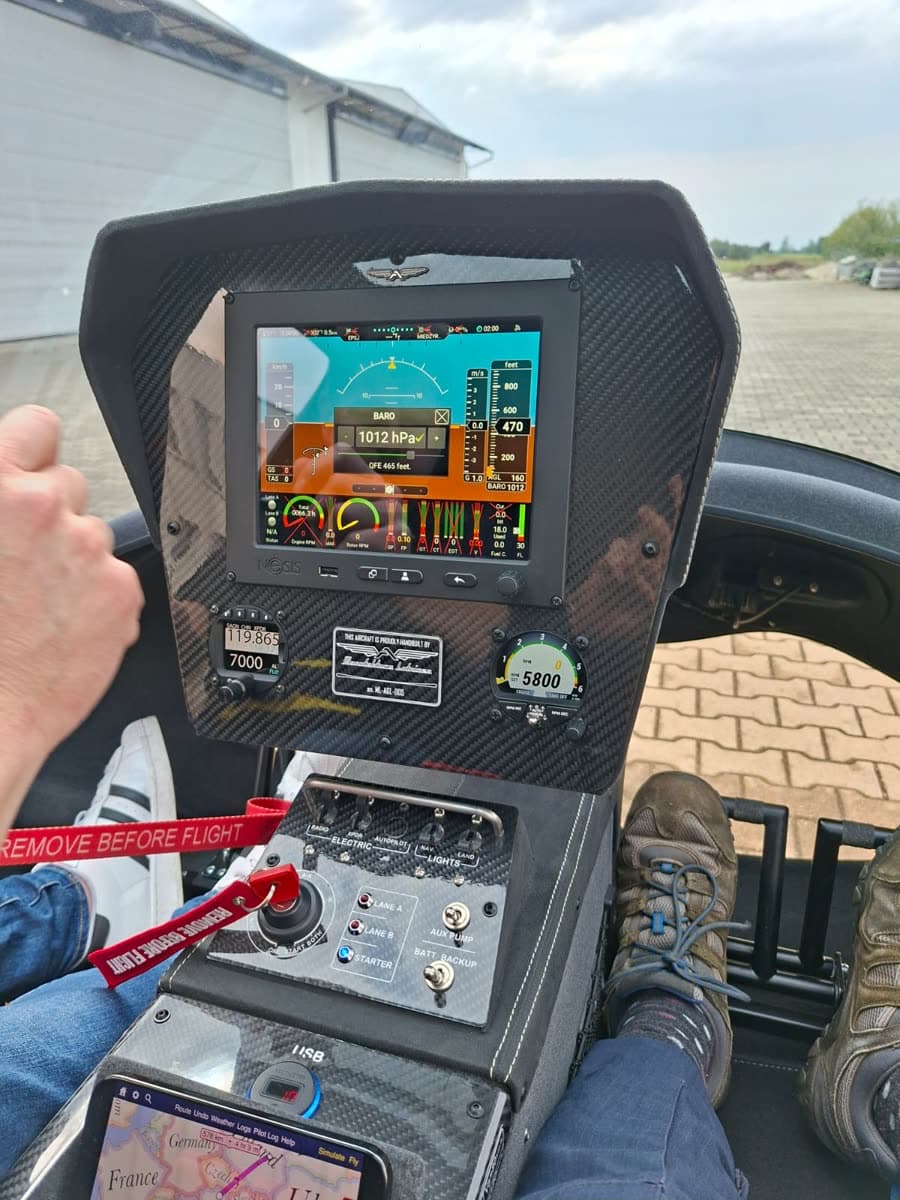
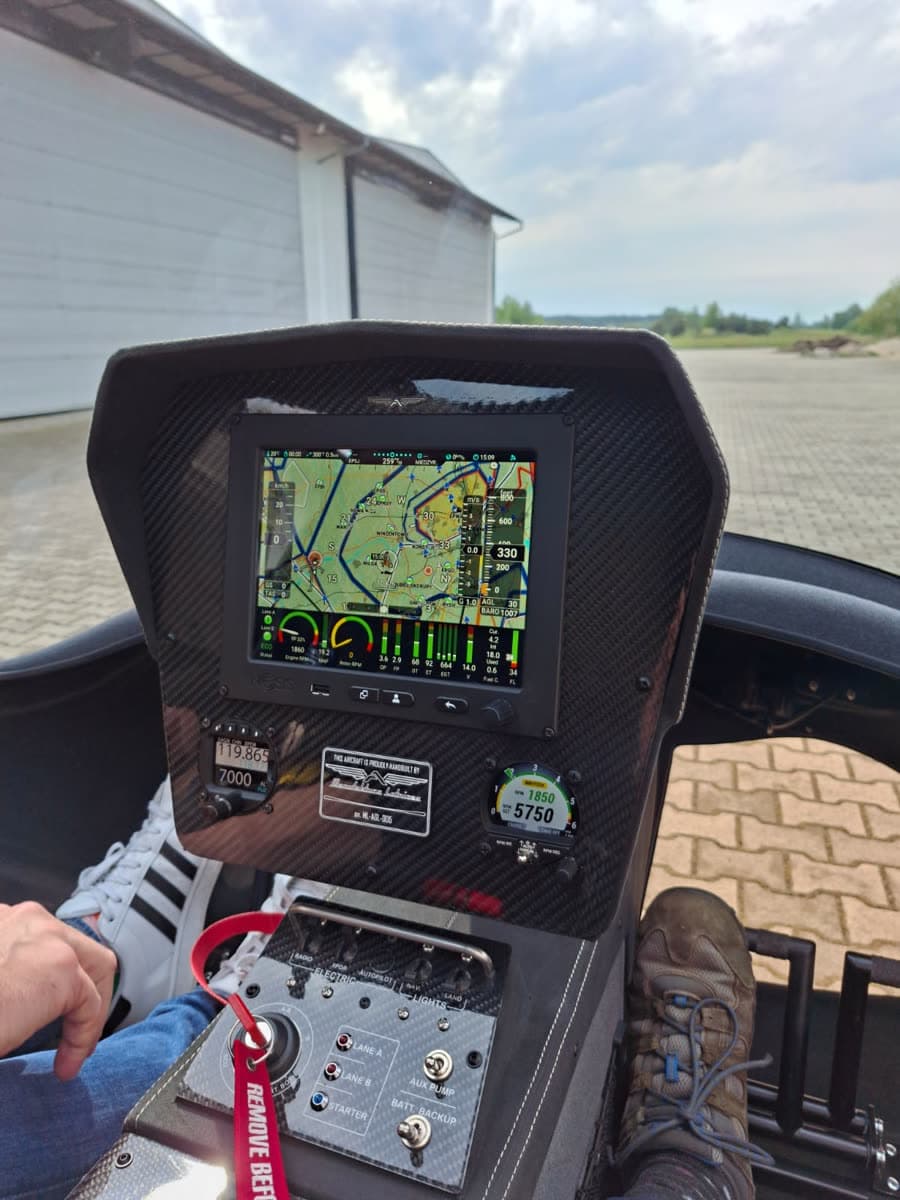
In our answer to a Flight Training News column, a 1999 trial lesson meant a borrowed flying suit sized for somebody twice your size. Here is the 2026 version. Look closely at the photos below - jeans and trainers. That is not a staged shot; that is what our students turn up in and what they fly in.
You just get in
No kit list, no borrowed gloves, no dressing up. You arrive in street clothes and you fly in street clothes - and training in the Algarve, where the weather is the reason we send students there in the first place, jeans and trainers are simply the right answer all year. Headgear is provided; if you are particular about a shared headset, bring your own ear pads - a universal hygienic set costs a few pounds and clips on in seconds. That is the entire equipment conversation.
The ARGON's own cabin is enclosed carbon fibre, ventilated in summer and heated in winter, with 360-degree visibility through the glazing - and training on our own ARGONs begins as soon as our certification is complete, so what you learn will transfer one-to-one to the aircraft you might one day own.
The office
The panel is a Kanardia NESIS glass display: attitude, moving map, engine and rotor RPM side by side, with a dedicated rotor tachometer, radio and transponder below - plus autopilot, dual ignition lanes and a backup battery on crisp carbon fibre. The plate on the panel says it plainly: this aircraft is proudly handbuilt by Manufaktura Lotnicza.
The muscle
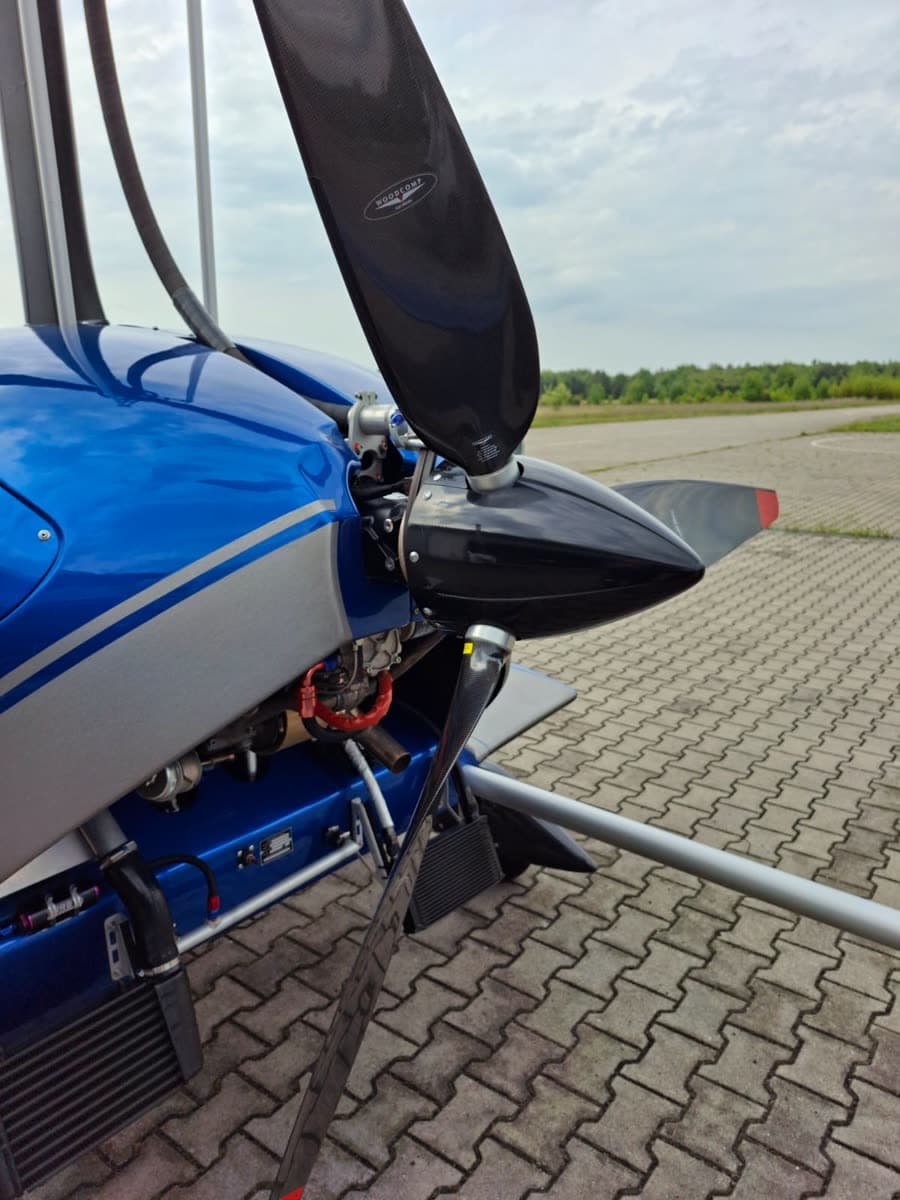
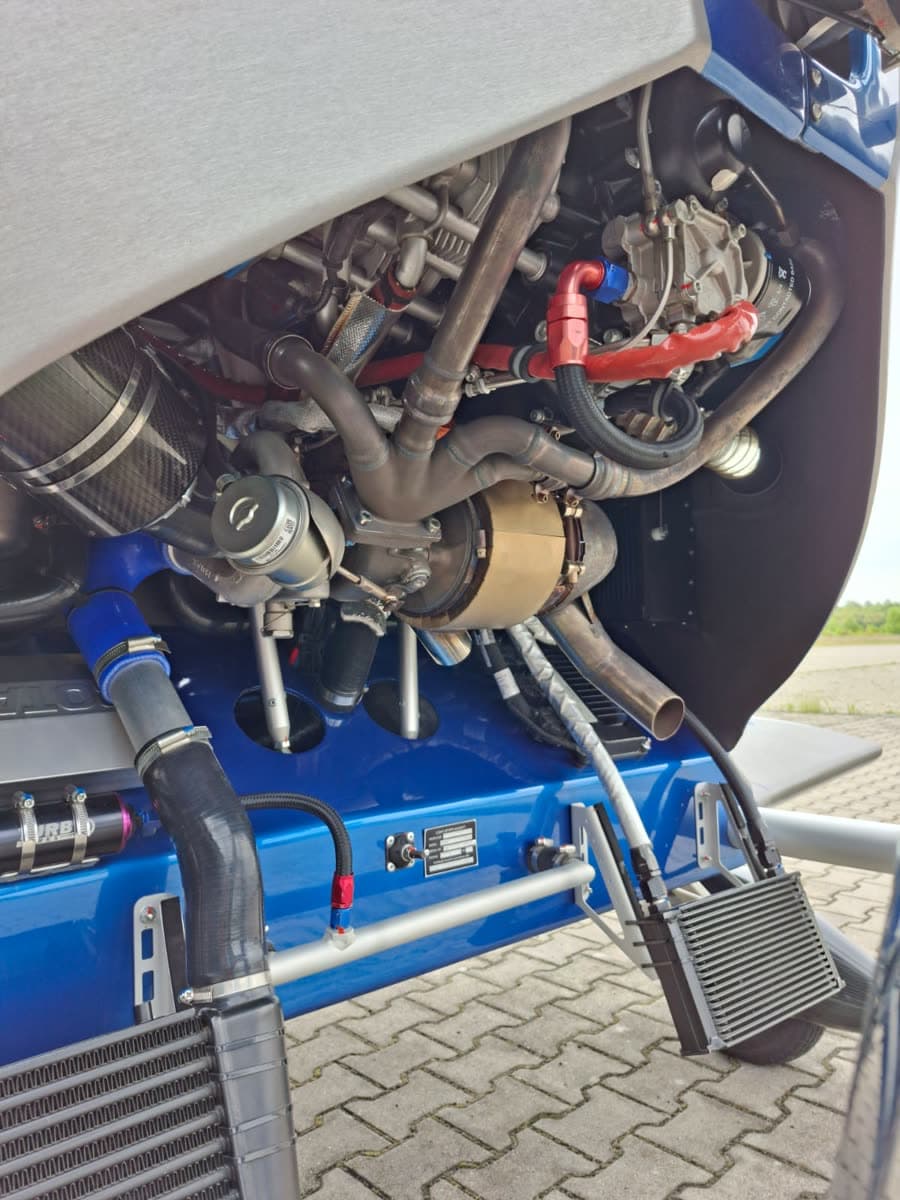
Behind the cabin: a turbocharged, fuel-injected ROTAX with an intercooler and oil cooler, swinging a Woodcomp carbon constant-speed propeller. Trainer is not a euphemism for tired - this is current hardware, maintained by our own service.
The landing that explains the 40 hours
People ask why the UK licence takes 40 hours when France manages with 15. This video is the answer. Fifteen hours teach you to fly a gyroplane like an airplane - long, flat, fast approaches onto long runways. Forty hours teach you to fly it like a gyrocopter: watch the touchdown - almost on one spot, like a helicopter, fully under control all the way down, rolling barely a couple of metres. An airplane-style landing is possible, but it throws away the whole point of the machine: the safety of an aircraft that can arrive on two metres of runway, a farm strip or a beach, into any reasonable wind. That is not a party trick - it is the skill the extra hours exist to build.
Try the seat yourself
Come as you are - jeans are fine. Book a trial flight or start the PPL(G) with our intensive Algarve course.
Frequently asked questions
What should I wear for a gyrocopter lesson?
Whatever you arrived in. Jeans and trainers are exactly what our students fly in - no flying suit, no borrowed gloves, no kit list. Training runs in the Algarve, where the climate makes street clothes the right answer all year round. Headgear is provided; if you prefer your own ear pads for hygiene, a universal set costs a few pounds and clips straight on.
Will I be cold when I fly?
Not in the Algarve, which is exactly why we train there: the climate is comfortable enough that students fly in jeans and trainers all year round. The days of oversized borrowed flying suits are history. The ARGON itself has a fully enclosed carbon fibre cabin, ventilated in summer and heated in winter, with 360-degree visibility through the glazing.
Will I train on the same aircraft you sell?
That is the plan, and it starts as soon as our certification is complete: our own ARGONs go into training, with the same glass avionics and engines as the machines we deliver to customers - so the aircraft you learn on is the aircraft you would own. Ask us where that stands when you book.
How short can a gyrocopter landing be?
Flown properly, a gyroplane touches down almost on one spot, like a helicopter, and rolls just a couple of metres. A long airplane-style wheel landing is possible, but it throws away the gyro's greatest safety asset: the ability to arrive on any small patch of ground, into any reasonable wind, fully under control.