

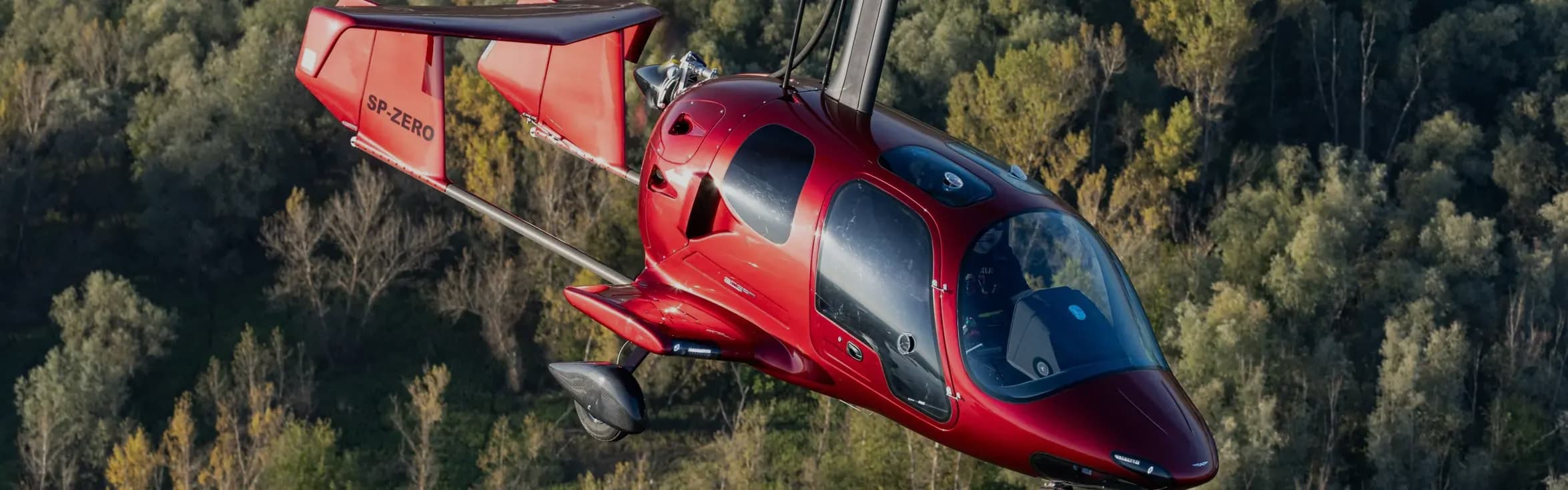
French vs UK Gyroplane Licence
15 hours vs 40 - and what the difference really buys you
Here is a fact that surprises many student pilots: in France you can hold a gyroplane licence after roughly 15 hours of training. In the UK, the PPL(G) asks for a minimum of 40 hours. Same aircraft, same sky - nearly three times the training. Is the UK simply being bureaucratic? No. The difference is not paperwork. It is what you learn.
The French route: fast and functional
France treats gyroplanes as ultralights, with a famously light regulatory touch. The training is short, the cost is lower, and pilots come out flying perfectly adequately. You take off, you cruise, you navigate - and you land the gyro the way you would land an aeroplane: an approach, a flare, a rolling touchdown on the runway.
For many pilots that is enough. But it leaves the gyro's most remarkable ability - and its deepest safety reserve - untouched.
What the quick course never teaches
A gyroplane does not have to land like an aeroplane. It can land like a helicopter - on one point, with virtually no ground roll. The free-spinning rotor stores energy, and a pilot who has been taught to manage that energy can cushion the aircraft down onto a spot the size of a garden. A field, a clearing, a strip of beach - places no aeroplane could accept become safe landing sites.
This is precisely where the safety of the gyroplane lives. An engine failure in a gyro is not a drama - autorotation is its normal state of flight - but only a pilot trained in low-speed rotor energy management can convert that gentle descent into a precise, near-zero-roll touchdown wherever it is needed. Land a gyro only like an aeroplane, and you are flying a safer aircraft with an aeroplane-sized safety margin. Master the spot landing, and the full margin is yours.
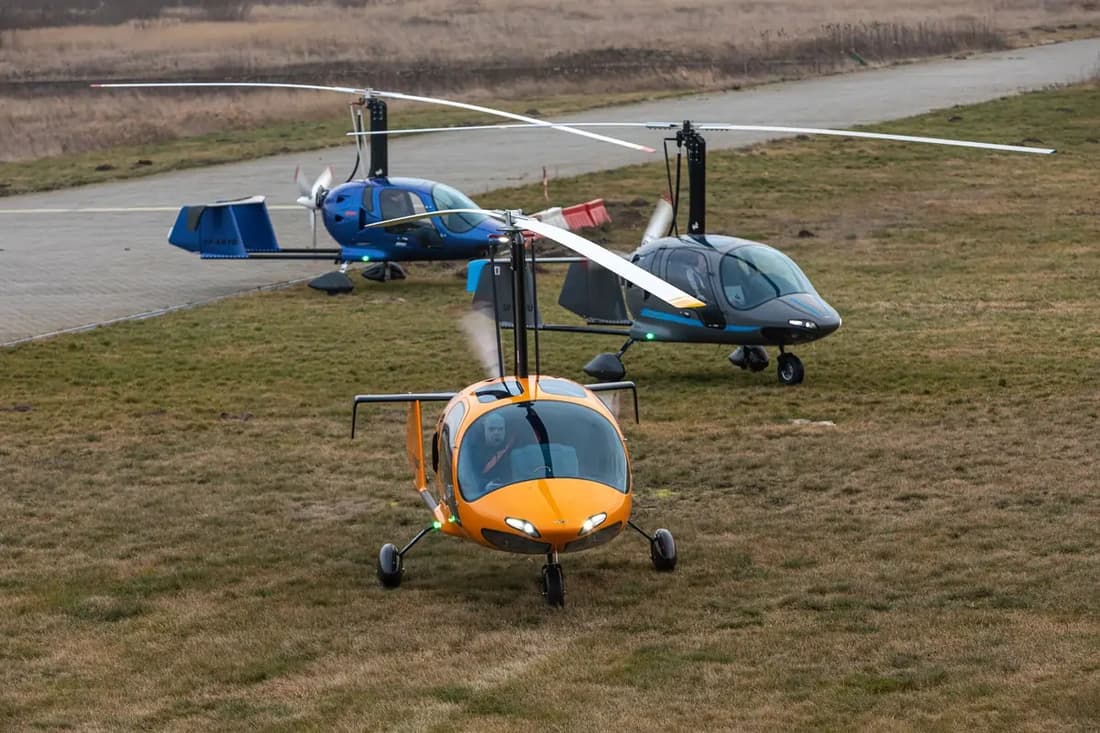
Why the UK asks for 40 hours
The UK syllabus is built to produce mastery, not just competence: general handling, navigation, two cross-country exercises, the General Flying Test - and the landing technique in all its depth. Gyros feature distinct flight dynamics, and the extra hours are where a pilot stops steering the aircraft and starts feeling the rotor.
Fast AND thorough: our answer
The honest reading is this: France optimises for the calendar, the UK optimises for the skill. At Argo Aero we refuse to choose. Our intensive programme in the Algarve delivers the full, deep syllabus - spot landings included - at a pace of two hours back to back each day from an exclusive ultralight airfield in year-round flying weather. The depth of 40 hours, compressed into the calendar of a holiday. Check the free dates and book your training, or start with a experience flight.
Frequently asked questions
How long does a gyroplane licence take in France?
Under the French ultralight (ULM) system a gyroplane licence typically takes around 15 hours of training. It is a quick route into the air, and pilots fly perfectly adequately with it.
How long does the UK gyroplane licence take?
The UK PPL(G) requires a minimum of 40 hours of training, or 25 hours for holders of certain other pilot licences, plus two cross-country exercises and the General Flying Test.
What does the longer UK training actually teach?
The subtleties of rotor control - above all landing. A quick course teaches you to land a gyro like an aeroplane, with a rolling touchdown. Full training teaches you to land it like a helicopter, on one spot, by managing the rotor's stored energy. That skill is where the gyro's real safety margin lives.
Can a gyrocopter really land on one spot?
Yes. In skilled hands a gyroplane can touch down with virtually no ground roll - like a helicopter - because the free-spinning rotor stores energy that a trained pilot uses to cushion and stop the landing. It is one of the aircraft's most remarkable and most safety-relevant abilities.