

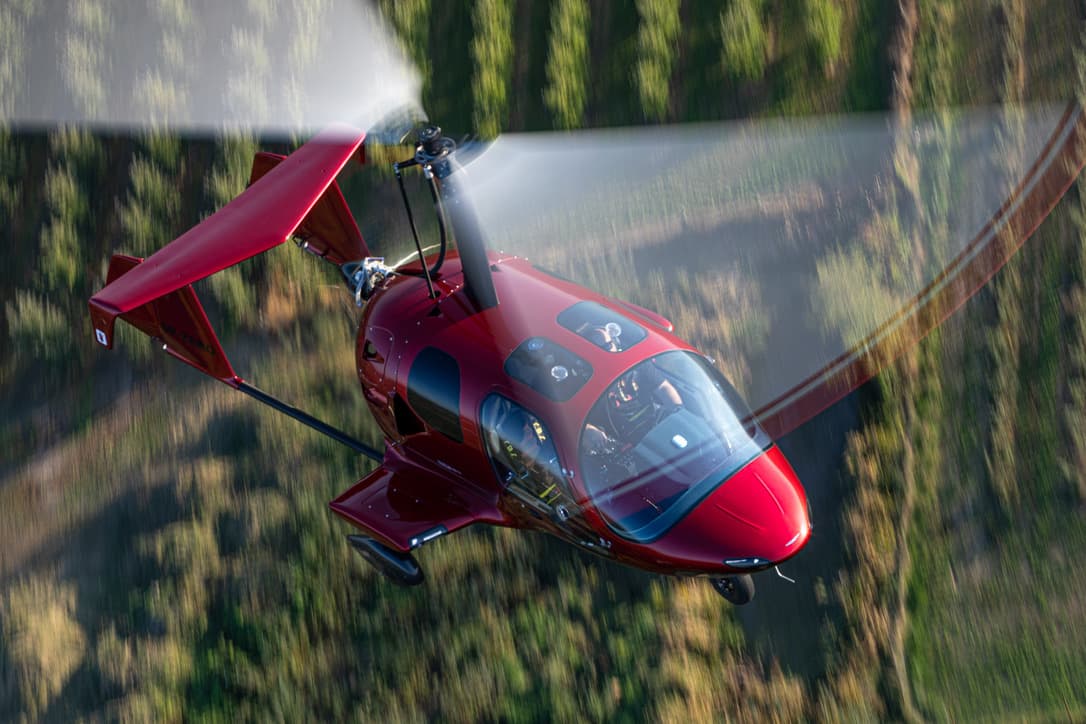
Cirrus SR22 vs Sling TSi vs ARGON GTL
Three answers to the same question, and what each one costs you
We sell one of these three, so read the rest with that in mind. We also own one of the others. The aircraft below is our own Sling TSi, on the grass at the end of a flight - which is the reason this is a comparison rather than a specification sheet with a sales paragraph on the end.
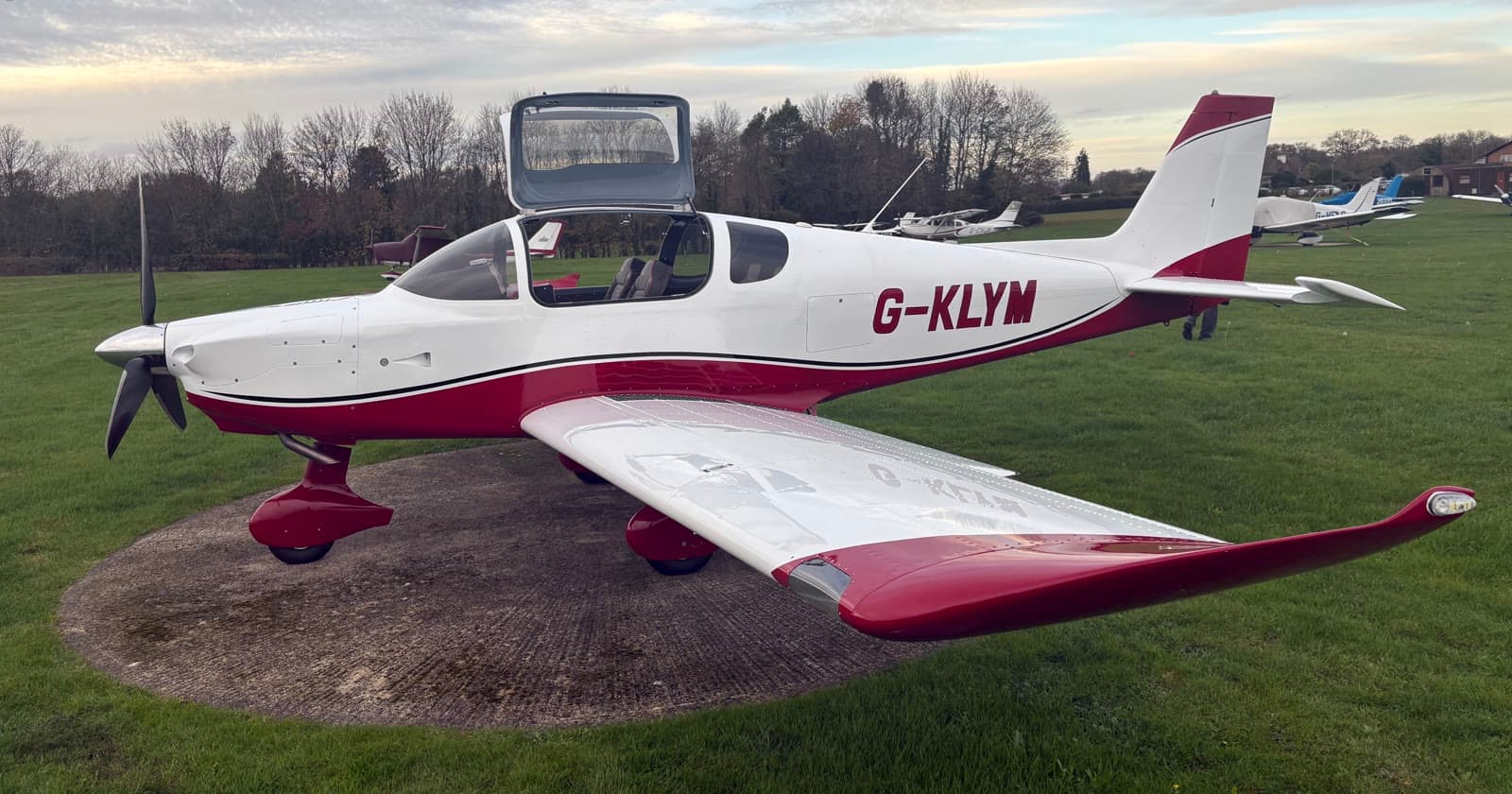
Our Sling TSi. The same ROTAX 916 iS that is in the ARGON GTL, two more seats, and about twice the cruise.
How the Cirrus, the Sling and the ARGON differ
These aircraft are usually discussed as if they were rivals. They are not - they are three different answers, and the useful way to see them is as a triangle where each pair shares something the third does not.
- The Sling and the ARGON share an engine. Both run the ROTAX 916 iS - the same 160 hp turbocharged unit, the same unleaded petrol, the same service schedule. Which is why they cost roughly the same to keep.
- The ARGON and the Cirrus share a cabin. Not the price and not the performance - the experience of sitting in one. Enclosed, leather, heated, glass panel, autopilot.
- The Sling and the Cirrus share a mission. Four seats, hundreds of miles, cross-country at speed. The gyroplane does not compete there and we will not pretend it does.
Put the triangle together and the ARGON occupies a specific corner: the running costs of the Sling with the cabin of the Cirrus, in exchange for speed, range and two seats.
Cirrus SR22 vs Sling TSi vs ARGON GTL: the numbers
| ARGON GTL | Sling TSi | Cirrus SR22 | |
|---|---|---|---|
| Price | From £165,000 | About $230,000-335,000 completed | $1.15m-1.4m new |
| Engine | ROTAX 916 iS, 160 hp | ROTAX 916 iS, 160 hp | Continental, 310 hp |
| Fuel | Unleaded petrol, 23 l/h | Unleaded petrol, 28 l/h | Avgas, far more of it |
| Per flying hour, all in | £89 at 150 h a year | About $100 | $250-400 |
| Seats | Two (three in the Triple) | Four | Four |
| Cruise | 81 kt | 155 kt | 180-220 kt |
| Range | About 408 nm | 1,000 nm | 830-907 nm |
| Panel | Garmin glass, 3-axis autopilot | Garmin G3X Touch, autopilot | Garmin Perspective+ |
| Runway | 100 m to take off, 60 m to land | A proper strip | A proper runway |
| Can it stall? | No | Yes | Yes |
| Weather | Day VFR | Day VFR | IFR, known ice available |
Our figures are ours. The others are the makers' and the market's, quoted in the currency they sell in, and hourly costs are never calculated the same way twice - treat them as the shape of the thing rather than a quotation. The runway row is the one where the gap is widest and least appreciated: how much runway a gyrocopter needs is 100 metres to take off and 60 to land, from the flight manual, and both aeroplanes here need a proper surface to work from.
The same engine, twice: the ROTAX 916 iS
This is the detail that surprises people. Open the cowling on a Sling TSi and on an ARGON GTL and you are looking at the same thing: a ROTAX 916 iS, turbocharged, FADEC controlled, 160 horsepower, five-year warranty, running on the unleaded petrol you buy at a filling station.
Which means the boring part of ownership is the same for both. The same service intervals, the same parts, the same mechanic conversation, the same fuel bill - and both of them a fraction of what a 310 hp Continental drinking avgas costs to feed and keep. The ARGON is the more frugal of the two in practice: 23 litres an hour at cruise against the Sling's 28.
The engines are identical; the airframes do entirely different things with the power. What that engine actually drinks is set out separately.
Garmin glass and autopilot in all three
A decade ago this comparison would have ended here, because the cheap aircraft had cheap instruments. It no longer works that way. The ARGON and the Sling both fly behind Garmin glass with a full autopilot - ours a G3X with three-axis control, theirs a G3X Touch with a G5 standing by. The Cirrus has Perspective+, which is a more capable installation in a more capable aeroplane, but the gap is one of degree now rather than of kind.
The same is true inside. Hand-stitched leather, carbon fibre panel, heating and ventilation, seats you can sit in for four hours: the ARGON has these because it is built by hand, one aircraft at a time, and not because it is expensive.
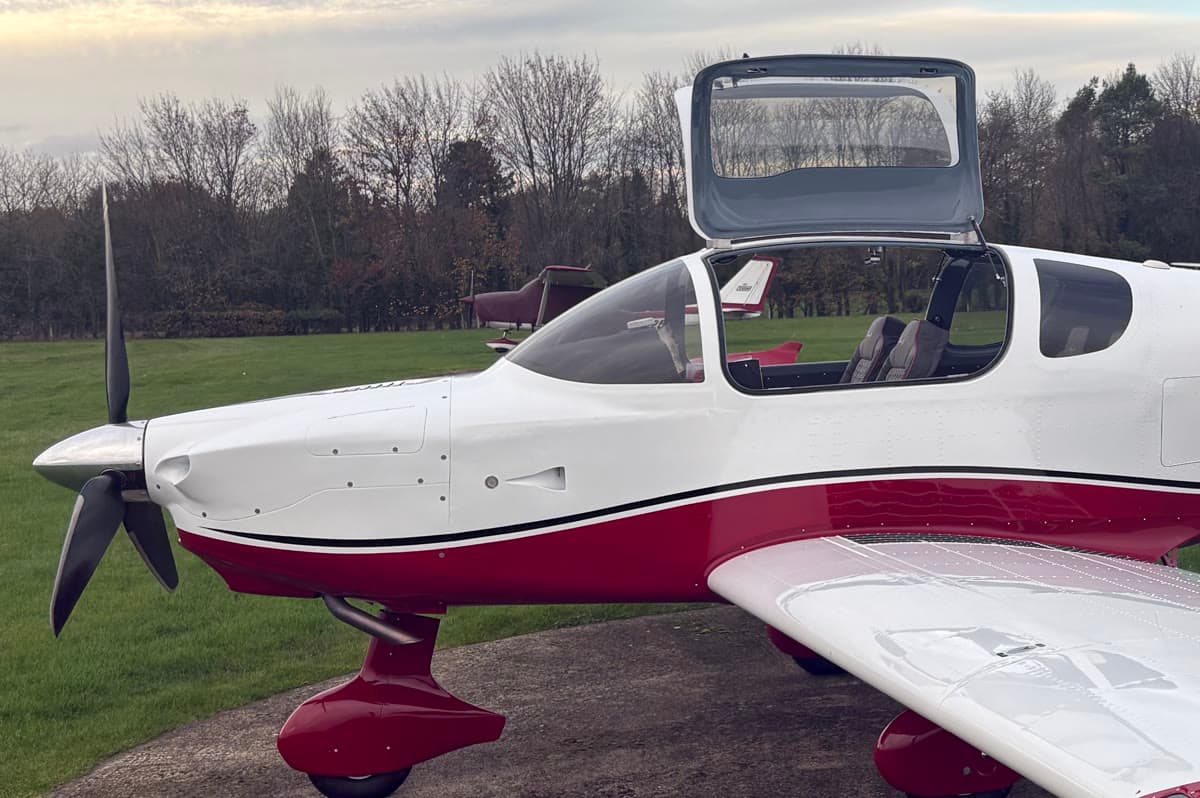
Ours, canopy up. Leather and glass in an aircraft that costs a third of the Cirrus - and behind that spinner, the engine the gyroplane also uses.
Where the gyroplane loses to the Sling and the Cirrus
Speed. A Cirrus cruises at two and a half times our speed, a Sling at nearly twice. If your flying is 400 miles each way at a weekend, that difference is your Saturday.
Range and seats. Both aeroplanes carry four people and both go more than twice as far on a tank. The GTL carries two; the Triple carries three and is not UK-certified.
Weather. The SR22 is an IFR aeroplane and can be had with known-ice protection. A gyroplane is a day-VFR machine. If you need to file and go regardless, this comparison is already over.
Where the gyroplane wins, and it is not price
The stall is not available to us. The most common way light aircraft are lost is asking a wing for more lift than the airflow can give. A gyroplane's rotor is turned by the air passing through it, so it cannot stall. Fly it too slowly and it descends under control. The Cirrus answers the same problem with a parachute; we answer it by removing the failure mode.
Rough air. The rotor disc carries a high loading and cuts through gusts that make a light aeroplane unpleasant. On the sort of blustery British afternoon that keeps a Sling in the hangar, the gyro is comfortable. Over a year, that is flying days.
You do not need a runway. A few dozen metres of grass, into whatever wind there is. No slot, no circuit, no landing fee - a farm strip, and the aircraft lives closer to home.
And you can see. There is no wing. The view is 360 degrees and downward, which is a different activity from looking at scenery past a wing root.
See what £165,000 buys
A finished GTL at golden hour - nose to tail, the engine bay, the Garmin panel and the leather inside. Stay to the end for the scale.
So which one should you buy?
Buy the Cirrus if you carry four people long distances on a schedule and need to fly in weather. It is the only one here that does that, and it is very good at it.
Buy the Sling if you want most of that for a third of the money and can accept day VFR. We are not being polite about this to look even-handed - we bought one. Four seats, genuinely quick, the same engine as the gyroplane, and a fine aeroplane.
Buy the gyroplane if your flying is shorter hops from small places, if you would rather fly forty weekends than twenty, if the stall has always bothered you, and if you want a cabin of the standard the Cirrus sets at a fraction of what the Cirrus costs to keep.
That last one describes more people than the market assumes - which is the whole reason we do this. The GTL in full, or what it costs to buy and run.
Frequently asked questions
What is the Sling TSi price and cruise speed?
About $230,000 to $335,000 completed depending on specification, roughly 155 knots at cruise, and about 1,000 nm of range. It shares its ROTAX 916 iS with the ARGON GTL - same fuel, same service schedule, same warranty - so the two cost much the same to keep and fly nothing like each other.
What is the Cirrus SR22 cost of ownership?
New, it is $1.15m to $1.4m to buy and $250 to $400 an hour to run, before hangarage. That figure is why people arrive at this comparison at all. For the cabin and the panel without the speed, an ARGON GTL is £165,000 and £89 an hour all in; for the four seats and the range, a Sling TSi is $230,000 to $335,000 completed.
Which aircraft use the ROTAX 916 iS, and what are its specs?
The 916 iS is turbocharged, fuel injected and FADEC controlled, gives 160 hp, runs on unleaded petrol and carries a five-year warranty. Both the Sling TSi and the ARGON GTL are built around it, among others. The gyroplane burns about 23 litres an hour at cruise, the Sling about 28.
Is a gyroplane as comfortable as a Cirrus SR22?
In the ways a cabin is comfortable, it is closer than the price gap suggests: an enclosed carbon fibre cabin, hand-stitched leather, heating and ventilation, a Garmin glass panel with a three-axis autopilot. What it adds that no aeroplane has is 360-degree visibility, because there is no wing in the way. What it gives up is speed, range and two seats.
What is the Cirrus SR22 cost per hour?
Between $250 and $400 an hour once fuel, maintenance, insurance and reserves are counted - the figure owners mean by cost of ownership rather than fuel alone. A Sling TSi on the ROTAX 916 iS is around $65. An ARGON GTL is £89.11 at 150 hours a year on the maker's own like-for-like method - of which about £35 is fuel, oil and servicing. Roughly a third of the Cirrus, not an eighth.
Are gyrocopters safer than planes?
They fail differently rather than less often. The most common way a light aeroplane is lost is the stall, and that is not available to a gyroplane: the rotor is turned by the airflow through it, so it cannot stall, and an engine failure costs thrust rather than lift. The Cirrus answers the same problem from the other end, with a whole-airframe parachute.
Should I buy a Cirrus SR22, a Sling TSi or an ARGON GTL gyroplane?
If you need to carry four people 800 miles in weather, buy the Cirrus; nothing else here does that. If you want a fast, efficient four-seat tourer at a third of the price, the Sling is a very good aeroplane. If your flying is shorter hops from small fields, in British weather, at a running cost closer to a car than an aircraft, the gyroplane is the one.