

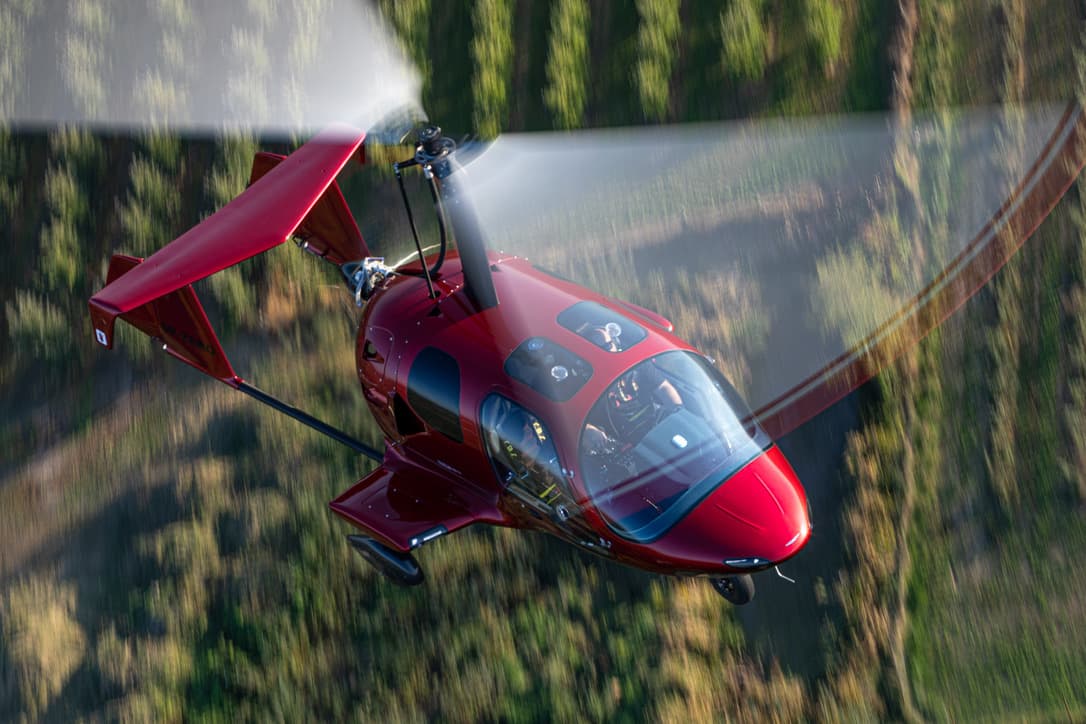
Side by Side or Tandem Gyroplane?
Where the other person sits changes the whole flight
A tandem gyroplane is narrower and slips through the air more easily. A side-by-side gyroplane puts the other person next to you - and that single difference decides how you learn, how you fly with somebody, and how much of it you enjoy. Both layouts fly the same way and neither is safer than the other. The choice is about what the second seat is for.
Our aircraft are side by side, so read this knowing it. The tandem's advantage is real and stated below, in its own words.
The two layouts, without flattery
| Side by side | Tandem | |
|---|---|---|
| Where your passenger is | Beside you, close enough to touch | Behind you, out of sight |
| Talking | Intercom, and normally without it too | Intercom only |
| What they see | The same view forward as you, plus their own side | Centreline view, and the back of your head |
| Instruction | The instructor sees your hands, your eyes and the panel | The instructor sees your shoulders |
| Getting in | A door each side, seats adjustable to three positions | Climb in one behind the other |
| Cabin width | 125 cm on the ARGON GTL | As narrow as one person |
| Drag | A wider frontal area to push | Narrower, which is the layout's real advantage |
| Loading when solo | Ballast in front of the empty seat | Seat position shifts the balance fore and aft |
What the tandem is genuinely better at
Cutting through the air. A fuselage only as wide as one pair of shoulders has less frontal area to push, and on a gyroplane - where everything hangs under one rotor and drag is paid for directly in speed and fuel - that is not a small thing. Tandem machines are also usually lighter and cheaper to buy, and they put both occupants on the centreline, so the aircraft does not care which seat is loaded.
If what you want is a single-seat experience with the option of a passenger, that is a coherent choice and nobody should talk you out of it.
What sitting next to someone changes
Three things, and they are the reasons people buy this layout.
Teaching. An instructor beside you sees your hands on the stick, your feet, your eyes and the panel you are looking at - so corrections arrive while you are making the mistake, not after it. From behind, the same instructor sees your shoulders and hears your voice, and has to infer the rest. Ask any instructor who has taught in both.
Company. You can see the other person's face, hand them something, point at the thing you are both looking at, and talk as you would in a car. In a tandem you fly with the back of a helmet. For couples, for a nervous first-timer, for a child who wants reassurance, the difference is the flight.
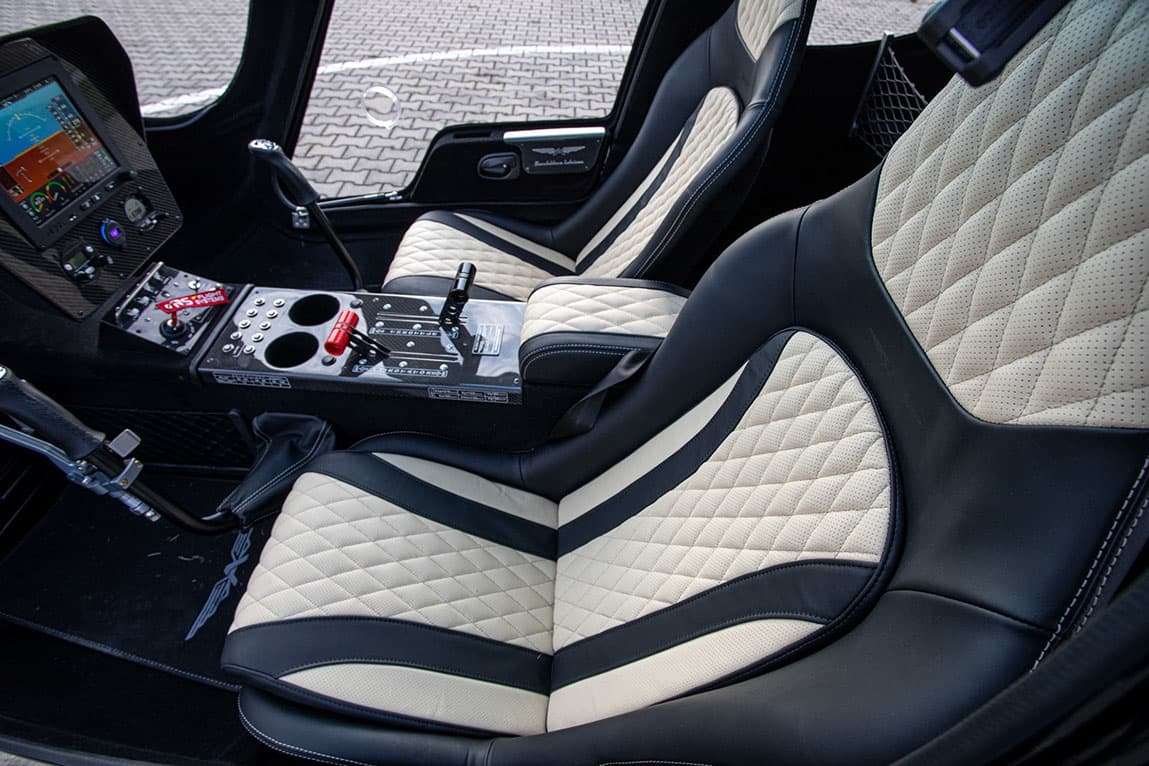
Room. The GTL's cabin is 125 cm wide with a door on each side and seats adjustable to three positions. Two adults of ordinary build are not touching shoulders, you both get in without gymnastics, and there is a boot behind for 20 kg of luggage - which is what turns a local flight into going somewhere.
The view, honestly
Tandem gives each person a clean view out of their own side and nothing in front but the horizon. Side by side gives you both the same forward view and your own side window, with a pillar between you and the other side. For sightseeing with somebody - which is what most second seats are used for - sharing the same view at the same moment beats having a private one.
The bigger question for the view is not the seating at all but whether there is glass in front of you: open cockpit or enclosed decides far more of what a flight feels like than tandem against abreast.
Loading: the part people find out late
A side-by-side aircraft flown solo is loaded off-centre, which is why the ARGON GTL manual requires ballast secured on the floor in front of the empty seat - and requires it removed before a two-person flight. A tandem shifts the balance along the length instead, so the rule there is which seat is used solo. Either way it is a check before every flight rather than a fact you learn once.
The weights themselves do not move with the layout: on the GTL, 110 kg on one seat, 200 kg on both, 600 kg all up - the full sum is here, and the walkaround that goes with it is in pre-flight checks.
So which one
Buy tandem if the aircraft is mostly for you, if the extra speed and lower price matter more than the company, and if your passenger is happy behind you. Buy side by side if you are learning, if you will fly with the same person often, or if the point of the aircraft is going somewhere together. Our range is abreast for exactly that reason - the ARGON models and prices are published, and the three-seat GTL Triple takes the idea one seat further.
Frequently asked questions
Is a side-by-side or tandem gyroplane better?
Tandem is narrower and therefore slipperier, and it puts both occupants on the centreline. Side by side puts the other person next to you, which changes both instruction and pleasure: you can see each other, share the same forward view and talk normally. For training and for flying with somebody you like, side by side wins; for a single-minded solo machine, tandem has the aerodynamic argument.
Which layout do ARGON gyroplanes use?
Side by side. The ARGON 915 iS and the ARGON GTL both seat two abreast in an enclosed carbon cabin - the GTL's is 125 cm wide, with a door on each side, three-position seats and four-point harnesses. The three-seat GTL Triple puts one seat forward and two behind.
Does the layout change what the aircraft can carry?
The limits do not change with the layout, but where you put the weight does. On the ARGON GTL the manual allows 110 kg on one seat and 200 kg on both together, within a 600 kg maximum take-off weight. Flying a side-by-side aircraft solo, the manual requires ballast on the floor in front of the empty seat - and removed again before anybody sits there.
Is a tandem gyroplane cheaper?
Often, yes - a narrower fuselage is simpler and lighter, and most tandem gyroplanes on the British market are open-cockpit machines, which are cheaper again. The comparison people actually make is not tandem against side by side but open against enclosed, and the seating follows from that choice more often than it drives it.
Which is better for taking photographs?
Tandem gives a passenger an uninterrupted view out of one side. Side by side gives two people the same view forward and a horizon shared in real time, which is what most people actually want from a flight with someone else - and in an enclosed cabin you are photographing through glazing either way.