

By Sofia Kovalenko, Content Writer · Edited by Maria Kryvoruchko
NPPL vs PPL - Which UK Pilot Licence?
And where the LAPL went: the rules as they stand after October 2025
The NPPL(A) is the UK's own licence; the PPL(A) is the international one. The NPPL(A) takes 32 hours for aeroplanes - 25 for microlights - and is flown on a Pilot Medical Declaration, but it is limited to aeroplanes of 2,000 kg or less with no more than four people on board, in UK-registered aircraft, and abroad only where another country agrees (CAA, CAP 3181, version 2). The PPL(A) takes 40 hours, or 35 at an approved training organisation, and a Class 2 medical, and it is the licence for flying abroad. Since 1 October 2025 the CAA no longer issues the LAPL(A): the NPPL(A) replaced it. This page is written by Argo Aero UK, which teaches gyroplanes, so the gyroplane licence is set beside the two at the end; the rules are quoted from the CAA documents listed under Sources.
NPPL vs PPL at a glance
| NPPL(A), SEP rating | NPPL(A), microlight rating | PPL(A) | PPL(G), gyroplane | |
|---|---|---|---|---|
| Minimum flying | 32 hours, including 10 supervised solo | 25 hours, or 15 for a licence with operational limits | 40 hours, or 35 at an approved training organisation | 40 hours, including 15 dual and 10 solo in gyroplanes |
| Medical | Pilot Medical Declaration | Pilot Medical Declaration | Class 2 at minimum | Pilot Medical Declaration |
| What you may fly | Aeroplanes up to 2,000 kg; microlights too, after differences training | Microlight aeroplanes | Single-engine piston aeroplanes, without the NPPL's mass limit | Gyroplanes |
| People on board | Four at most, including you | As the microlight allows | As the aircraft allows | As the gyroplane allows |
| Where | UK-registered aircraft; abroad only if that country agrees | UK-registered aircraft; abroad only if that country agrees | An ICAO licence - the one for flying abroad | A UK national licence |
What each one costs, with the schools' own figures, is in the cheapest way to learn to fly in the UK.
What changed in October 2025
- No more LAPL(A). From 1 October 2025 the NPPL(A) is the single UK licence below the PPL. LAPL(A) licences already issued stay valid; anyone part-way through LAPL(A) training was issued an NPPL.
- The PPL(A) minimum fell to 40 hours, in line with the ICAO standard, with a 35-hour course allowed at approved training organisations. Many pages still say 45.
- The ratings were renamed: SSEA became SEP and SLMG became TMG.
- The NPPL(A) privileges stayed the same, and since August 2026 CAP 3181 sets out the night, IMC and aerobatic ratings that can be added to it.
What can you fly with an NPPL?
Aeroplanes with a maximum take-off weight of 2,000 kg or less, with no more than four people on board including you. The licence carries one or more of three class ratings - Single Engine Piston (SEP), Microlight and Touring Motor Glider (TMG) - and, after differences training, the SEP rating includes the privileges of the microlight one. Since 2021, SEP and TMG holders may also fly UK-registered Part 21 aeroplanes and motor gliders. The licence is for UK-registered aircraft; flying an aircraft registered elsewhere needs that state's permission.
Training for the SEP rating can be done at an approved or a declared training organisation, or with an independent flight instructor, and the ten hours of supervised solo must include a solo cross-country of at least 150 km with a full-stop landing away from home.
Can you convert an NPPL to a PPL?
Yes, and more of your flying now counts. The training organisation assesses what you have flown - three-axis microlight time included - and credits it towards the 40 hours. What cannot be credited: ten hours of supervised solo and a solo cross-country in an aeroplane that is not a microlight, the PPL exams and the skill test. If you have not passed the PPL exams, an NPPL(A) leads to four bridging papers - air law and operational procedures, aircraft general knowledge, flight performance and planning with navigation, and principles of flight.
Is the NPPL worth it?
For flying in the UK, in aeroplanes of up to four seats, it does most of what a private pilot wants, on a medical declaration instead of a yearly Class 2 after 50 - see is 50 too old to learn to fly?. If you mean to fly abroad as a matter of course, the PPL(A) is the licence to train for from the start. A PPL holder can also fly on a declaration, but only inside limits the CAA sets: 2,000 kg, no more than three passengers, UK-registered, in UK airspace and in visual conditions.
Where the gyroplane fits
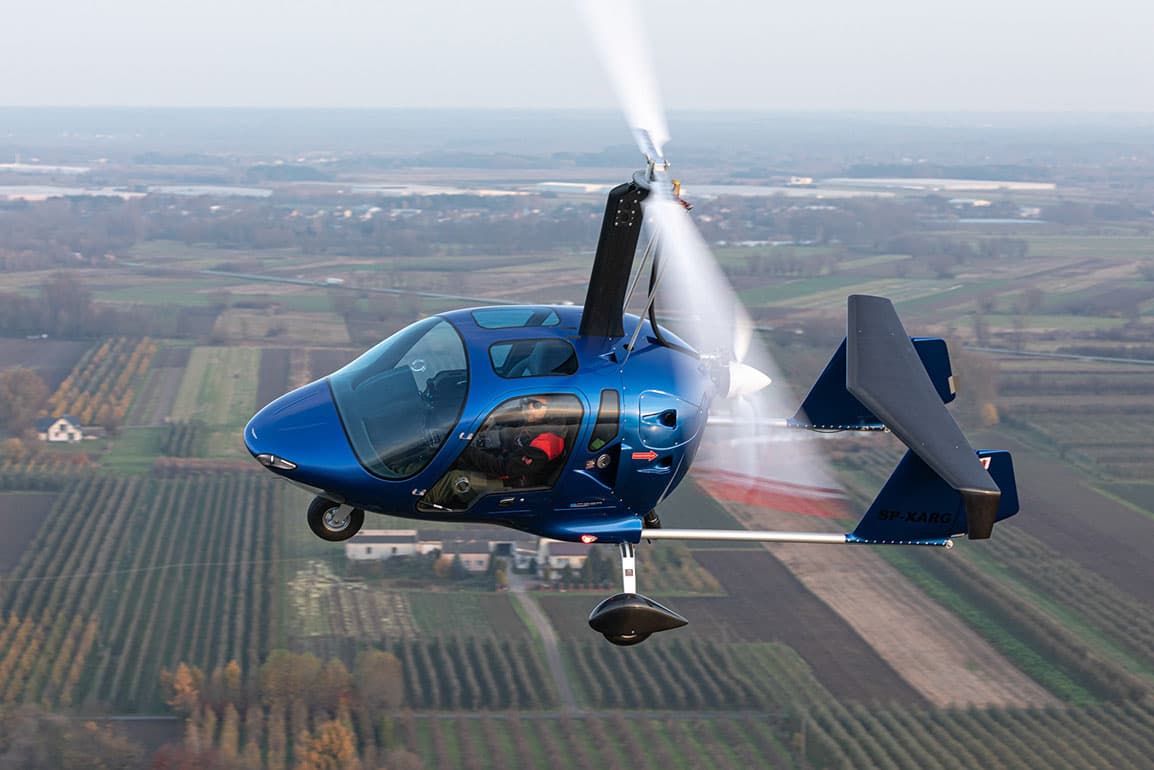
Neither the NPPL nor the PPL(A) lets you fly a gyroplane: that is a licence of its own, the PPL(G). It takes 40 hours, of which at least 15 dual and 10 solo must be in gyroplanes, and it runs on a Pilot Medical Declaration, under the CAA's Standards Document 44. What it involves is in the gyroplane pilot licence, and how a gyroplane compares with a microlight in gyrocopter vs microlight.
Frequently asked questions
Is the NPPL or the PPL better?
Neither is better; they do different jobs. The NPPL(A) is cheaper and quicker - 32 hours for aeroplanes under the CAA's CAP 3181, flown on a Pilot Medical Declaration - but it is limited to aeroplanes of 2,000 kg or less with no more than four people on board, in UK-registered aircraft, and abroad only where that country agrees. The PPL(A) takes 40 hours (35 at an approved training organisation) and a Class 2 medical, and it is the licence for flying abroad.
Can I still get a LAPL in the UK?
Not for aeroplanes. The CAA stopped issuing the LAPL(A) on 1 October 2025; the NPPL(A) replaced it as the single UK licence below the PPL. LAPL(A) licences issued before then remain valid, and students who had trained for one were issued an NPPL instead.
Can I fly abroad on an NPPL?
Only with the agreement of the country concerned. The CAA says the NPPL can be used on UK-registered aircraft inside UK airspace unless you have an agreement with the aviation authorities of another country. For regular flying abroad, the PPL(A) is the licence to hold.
Can I convert an NPPL to a PPL?
Yes. Under the rules in force since 1 October 2025, a training organisation assesses your previous aeroplane flying - three-axis microlight time included - and credits it towards the 40 hours. You still need 10 hours of supervised solo, including a solo cross-country, in an aeroplane that is not a microlight, the PPL exams and the skill test. NPPL(A) holders who never passed the PPL exams sit four bridging papers: air law and operational procedures, aircraft general knowledge, flight performance and planning with navigation, and principles of flight.
What medical do I need for an NPPL?
A Pilot Medical Declaration, made under article 163 of the Air Navigation Order 2016 - a declaration you make rather than an examination. CAP 3181 sets it as the minimum standard for flying as pilot in command on an NPPL and for supervised solo training.
Sources
- CAA, CAP 3181, The National Private Pilot's Licence, version 2, August 2026 - caa.co.uk/CAP3181
- CAA, UK Flight Crew Licensing - October 2025 changes, licensing webinar, 4 September 2025 - caa.co.uk
- CAA, LAPL light aircraft pilot licence and National Private Pilot Licence
- CAA, Medical requirements for pilots
- CAA, Standards Document 44, version 6 - the PPL(G)